
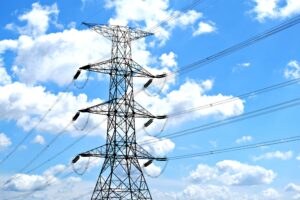
For a century, crude oil dictated the wealth of nations and the trajectory of global conflicts. Pipelines and sea lanes served as the arteries of the modern economy, supported by military doctrines explicitly designed to protect the uninterrupted flow of liquid hydrocarbons. Economic dominance is now decoupling from fossil fuel extraction and attaching itself to the physical infrastructure of the electrical grid. Global leverage today depends strictly on a nation’s capacity to generate, route, and continuously balance electrons across vast distances.
Driven by a sudden demand shock, this realignment has caught utility planners entirely off guard. For roughly two decades, electricity consumption in the developed world remained remarkably flat, stabilized by energy-efficient appliances and the steady offshoring of heavy manufacturing. That predictable era vanished with the commercialization of generative artificial intelligence. The International Energy Agency previously projected global data center power consumption could double from 2022 levels to over 1,000 terawatt-hours by 2026, spurred by computationally punishing training requirements. While it remains entirely possible that algorithmic breakthroughs will eventually moderate the highly inefficient scaling trajectories of current large language models, the immediate infrastructure response has already been triggered. The search for reliable, carbon-free baseload power is so acute that technology companies are bypassing traditional grid operators altogether; Microsoft, for example, signed a twenty-year agreement with Constellation Energy to revive a dormant nuclear reactor at Three Mile Island exclusively to feed its server farms.
Raw generation capacity, however, is only the first hurdle in a vastly more complex logistical chain. Moving current from the remote plains and coastlines where wind, solar, or nuclear facilities operate to the industrial hubs where demand is concentrated requires an immense physical apparatus. At its peak in late 2023, the Lawrence Berkeley National Laboratory tracked nearly 2.6 terawatts of proposed generation and storage capacity waiting in interconnection queues. Although that backlog has since settled to just over 2 terawatts, it still represents more capacity than the entire existing U.S. power plant fleet. These proposed projects are trapped in bureaucratic holding patterns because regional operators must conduct exhaustive engineering studies to ensure that plugging in a massive new power source will not melt local wires or destabilize surrounding grid frequency.
Resolving those bottlenecks exposes the severe friction between an accelerating digital economy and an unyielding physical world. Building a high-voltage transmission line means negotiating with hundreds of distinct local jurisdictions, facing years of environmental lawsuits, and navigating the politically toxic use of eminent domain. Consider the SunZia transmission project, designed to carry wind power from New Mexico to markets in Arizona and California. It required seventeen years of regulatory reviews, route adjustments, and permitting battles before breaking ground, contrasting sharply with the mere six years needed for actual construction. The pace of artificial intelligence development is currently beholden to the speed at which societies can negotiate land rights.
Should permits finally be secured, grid operators face a crippling shortage of the physical components required to step voltage up for long-distance travel and down for local distribution. The modern network relies heavily on custom-engineered, house-sized transformers that are hand-wound to specific regional voltage requirements and climate conditions. According to recent industry surveys, average lead times to procure a large power transformer now range between 128 and 144 weeks, stretching up to four years for specialized generation step-up units, while prices have multiplied. Although domestic manufacturing initiatives are beginning to surface in Western countries, they are unlikely to alleviate the acute backlog before the end of the decade, leaving grid expansions dependent on a highly stretched supply chain.
Beyond domestic infrastructure challenges, the hardware shortage points to a broader geopolitical vulnerability centered on industrial capacity. Manufacturing transformer cores requires highly specialized grain-oriented electrical steel, a market dominated by a tight oligopoly of global producers. Expanding grid networks and deploying utility-scale battery storage demands unprecedented volumes of base and rare earth metals; a single offshore wind turbine, for instance, can require several tons of copper. Control over the refining and processing capacity for these materials dictates international leverage. The geopolitical center of gravity is actively shifting away from those who sit on energy reserves toward those who dominate the processing of raw metallic inputs.
Corporations are responding directly to this geographically restricted reality by moving their operations to the power, rather than waiting for the power to reach them. Heavy industries are relocating to regions with established, abundant electricity. Stegra, the Swedish industrial firm formerly known as H2 Green Steel, chose Boden in northern Sweden for its flagship zero-emissions plant specifically to tap into the region’s legacy hydroelectric and wind resources. Conversely, in heavily industrialized zones burdened by high structural costs, the inability to secure cheap, continuous power translates immediately into the physical flight of manufacturing capacity. Chemical giant BASF, for example, has actively curtailed production and shuttered facilities at its historic Ludwigshafen complex in Germany. The company cited persistently uncompetitive energy prices across Europe, where a historic natural gas shock simultaneously inflated both raw feedstock costs and grid electricity rates.
Managing this concentrated demand introduces immense engineering complexity for the jurisdictions that successfully attract it. Unlike coal or natural gas, electricity must generally be consumed the exact millisecond it is generated. Historically, fossil-fuel plants provided “mechanical inertia”—the physical momentum of massive spinning turbines that naturally stabilized grid frequency during minor disruptions. Replacing those heavy turbines with solar panels and solid-state batteries removes that physical buffer. Without the stabilizing momentum of spinning iron, the grid operates with a rapidly shrinking margin for error. Software must now artificially replicate what physics previously provided for free, relying entirely on instantaneous digital intervention to prevent localized faults from cascading into systemic blackouts.
This transition rewrites the baseline requirements for national security and economic resilience. Standing armies and naval fleets offer no protection against the structural decay of an overloaded power network or a supply chain choked by a lack of specialized electrical steel. True sovereignty in the coming decades will require mastering a profoundly new kind of fragility. As heavy mechanical buffers disappear from our infrastructure, survival depends on the flawless, continuous algorithmic synchronization of a network stretched to its absolute limits.
