
Why Control of Minerals Is Replacing Control of Oil
In June 2026, China added two American rare earth miners, MP Materials and USA Rare Earth, to its export control list. Around the same time, two Japanese nationals employed by Fuji Electric were detained in Dalian, accused of trying to smuggle rare earth magnets out of China by embedding them inside electromagnetic contactors, ordinary industrial components, to avoid export licensing. Chinese authorities arrested both men in mid and late June. It is believed to be the first known criminal case in China targeting employees of a Japanese company over alleged rare earth smuggling.
No tankers were seized. No pipelines were bombed. No cartel held a press conference. This is what a 21st century resource conflict looks like: a licensing rule, a customs form, a magnet hidden inside a switch.
Most people think artificial intelligence lives in the cloud. It doesn’t. It lives in the ground first. No mining, no magnets. No magnets, no motors. No motors, no data centers, no chips, no AI. Software is the part everyone sees. The part that actually decides who wins is buried in ore bodies, refineries, and export licenses most people have never heard of.
The twentieth century was built on oil. Countries fought over oil fields, pipelines, shipping lanes, and OPEC quotas because oil powered every car, ship, plane, and factory on earth. The twenty-first century is being built on a different substance entirely: lithium, cobalt, nickel, graphite, gallium, germanium, tungsten, and the seventeen elements known as rare earths. These don’t power engines. They power everything an engine has become: AI infrastructure, electric vehicles, semiconductors, defense systems, satellites, and the entire renewable energy buildout.
The shift is from fuel security to technology security. That distinction is the whole story.
- Part 1: What Oil Built
For a hundred years, energy security was foreign policy. The 1973 oil embargo reshaped the global economy in months. The Gulf Wars were, in no small part, wars about who controlled the flow of crude. Europe’s decades long dependency on Russian gas became one of the defining vulnerabilities of the continent, one that a single war in Ukraine was enough to expose completely.
Oil was a geographic chokepoint. It sat in specific places, moved through specific straits, and could be counted, tracked, and, in a crisis, blockaded. Navies existed to keep those routes open. Rare earths and critical minerals concentrate geographically too, just at a different stage: not in the ground, but inside the refineries and industrial zones that process them, most of which sit inside one country.
- Part 2: Getting the Vocabulary Right
Before going further, it’s worth untangling four terms people routinely collapse into one.
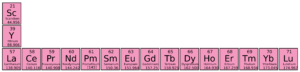
Rare earth elements are a specific set of 17 elements, including neodymium, dysprosium, and yttrium, prized for magnetic and conductive properties. They aren’t actually rare in the ground. They’re rare in usable, refined form.
Critical minerals is a broader policy category: materials a government has designated as essential and vulnerable to supply disruption. It includes rare earths but also things like gallium and germanium.
Battery minerals are the inputs specific to energy storage: lithium, cobalt, nickel, graphite.
Industrial metals like tungsten and antimony are older, more established commodities recently swept into the same strategic category because of their military and manufacturing uses.
The overlap is real, but the distinction matters, because the leverage each one confers is different. Battery minerals are about who builds the energy transition. Rare earths are about who builds the magnets, motors, and precision weapons that transition, and modern militaries, both depend on.
- Part 3: One Mineral, a Hundred Industries, All Resting on the Same Ground
A single rare earth element can show up in a dozen unrelated products. Neodymium magnets sit inside electric vehicle motors, wind turbines, smartphone speakers, missile guidance systems, and MRI machines. Gallium and germanium are essential to semiconductors and night vision optics. Antimony shows up in ammunition and flame retardants alike.
Oil had substitutes waiting in the wings: nuclear, gas, renewables, that took decades to mature but existed. For many of these applications, there is no substitute available today at comparable performance or cost, and researchers working on alternatives have made only partial progress. Nothing on the market does what a neodymium magnet does inside an EV motor at the size and weight modern engineering demands.
It’s worth tracing this all the way through, because the endpoint is what surprises people. Every AI data center sits at the far end of a chain that starts in a mine: mine, refine, chemical processing, semiconductor materials, chip manufacturing, data centers, AI. The AI boom is usually described as a story about compute, algorithms, and capital. It is also, less visibly, a story about who controls the gallium, germanium, and rare earths inside the cooling systems, motors, and precision components that data center infrastructure depends on. Take the mineral layer away and none of the rest of the stack exists.
- Part 4: Processing Is the Real Chokehold
This is where most coverage of this topic stops short, and where the actual story begins.
Mining critical minerals isn’t the hard part. Ore bodies exist across Australia, Chile, Indonesia, the Democratic Republic of Congo, Canada, Brazil, and the United States itself. The hard part, the part that takes decades and enormous capital to replicate, is turning raw ore into usable material: refining, chemical separation, magnet production, and precision component manufacturing.
China’s dominance runs through processing, not mining. Industry estimates put China’s share of global rare earth refining capacity at roughly 85 to 90 percent, alongside a similarly dominant position in refined tungsten output, generally cited between 80 and 85 percent. A country can mine its own ore and still be entirely dependent on a rival to turn it into something usable.
China has recently made that leverage explicit in law. Export rules introduced in October 2025 require a license for any foreign made product containing as little as 0.1 percent Chinese origin rare earth content, or made using Chinese processing technology, regardless of where in the world that product was manufactured or sold. The rule was modeled closely on the extraterritorial licensing framework the United States built to control global access to advanced semiconductors. The tool built to constrain China’s chip industry has effectively been copied and pointed back.
- Part 5: The Map Nobody Draws Correctly
The conventional map of this story is a list of countries: China, Australia, Chile, the DRC, the United States, as if each one held a comparable kind of power. It doesn’t work that way, because mining and refining are different stages of the same chain, and ownership doesn’t stop at the mine gate.
Australia hosts Greenbushes, the world’s largest hard rock lithium mine. But Greenbushes is majority owned by a joint venture, Tianqi Lithium Energy Australia, in which China’s Tianqi Lithium holds a 51 percent stake alongside Australia’s IGO. That joint venture in turn holds a 51 percent interest in Greenbushes itself, alongside US based Albemarle. The practical result is that a meaningful share of “Australian” lithium production runs through Chinese ownership before it ever reaches a customer. A useful map of this industry tracks who controls each stage of the pipeline, not who holds the reserves, and at almost every processing stage, one country appears disproportionately, sometimes even inside mines nominally owned by someone else.
- Part 6: Weaponizing Control, Not Scarcity
The instinctive fear is that China simply cuts off supply. The actual pattern is more unsettling, and harder to counter.
China has repeatedly announced sweeping restrictions, then suspended them. The October 2025 controls were paused through official notices in November 2025, alongside a pause on parallel US specific licensing rules, as part of a broader trade détente. But the suspensions came with explicit contingency language: restrictions could be reinstated if the underlying relationship deteriorates.
Announce, tighten, pause, threaten to retighten: that cycle is how an actor uses control itself as the instrument, rather than how a supplier maximizes revenue by withholding a scarce good. Reversible restrictions let China extract concessions, discipline behavior, and preserve pricing power, all while avoiding the kind of permanent supply shock that would finally force Western governments to fund the decades long buildout needed to route around it. A toggle switch keeps everyone guessing, and guessing is worse for planning than a clear crisis.
That’s the meaningful difference from the 1970s oil embargo. OPEC’s leverage was blunt and revenue driven. China’s leverage over minerals functions more like a valve than an embargo: precise, adjustable, and reversible, which makes it a more durable form of power, not a weaker one.
- Part 7: Governments Are Suddenly Spending Billions
The policy response has been fast and expensive, because the private sector alone won’t build a decade long refining project without a government backstop. The United States, European Union, Japan, India, and Australia have all launched subsidy programs, mining incentives, domestic refining investment, and strategic mineral stockpiles over the past two years.
The urgency is visible in the numbers, and the verifiable ones are stark enough on their own. China supplies close to 95 percent of the European Union’s imported rare earth elements. One financial analysis citing EU Chamber of Commerce in China research put the share of European businesses expecting government imposed restrictions to disrupt their supply chains at 60 percent, though a separate account of what appears to be the same underlying survey reports a different figure for firms already experiencing disruption, so treat the precise number as directional rather than settled. On price, NdPr oxide, the benchmark rare earth compound used in high performance magnets, jumped from about $63 to $123 per kilogram over roughly seven months in 2025 and early 2026, a move Benchmark Mineral Intelligence attributed to firm downstream magnet demand meeting deliberate supply management inside China. In response, the European Commission has proposed a program worth roughly $3.5 billion aimed at cutting the bloc’s dependence on Chinese critical minerals by half by 2029. Figures like these are what turn a supply chain risk into a cabinet level priority.
- Part 8: The Paradox Nobody Wants to Say Out Loud
Here’s the uncomfortable part. Everyone wants electric vehicles, solar panels, wind turbines, and AI infrastructure. Almost nobody wants what building those things actually requires: new mines, new refineries, new chemical processing plants in their own backyard.
The clean energy transition is, at the mineral level, an extraction heavy undertaking. Every solar panel and every EV motor begins its life in a mine and a refinery, often in places with real environmental and human costs. The industries marketed as the clean alternative to fossil fuels still run on the oldest industrial process there is: digging things out of the ground and processing them with heat, chemicals, and enormous energy inputs of their own.
- Part 9: Why Recycling Isn’t a Near Term Fix
Recycling is the answer people reach for instinctively, and it will matter eventually. The problem is timing. Demand for these minerals is growing faster than the supply of recyclable material becoming available, because most of the batteries and magnets in circulation today haven’t reached the end of their useful life yet. A battery installed in an EV in 2023 isn’t coming back for recycling in 2026. Recycling infrastructure is a genuine long term hedge against mineral dependency. It is not a solution to a supply chain problem unfolding over the next five to ten years.
- Part 10: Who Actually Benefits, and How Long the Window Stays Open
A handful of categories sit directly in the path of this shift: mining companies with assets outside Chinese control, refiners building non-Chinese processing capacity, magnet and battery manufacturers relocating supply chains, and defense contractors whose procurement now runs directly into these same bottlenecks. New magnet manufacturing capacity is expected to come online through the summer of 2026, a real, if partial, step toward reducing reliance on Chinese processing.
The caveat matters as much as the opportunity. The International Institute for Strategic Studies has concluded that meaningful reductions in the EU’s dependence on China for critical minerals will not materialize before the 2030s, even with current diversification efforts underway. Government and industry timelines for building genuinely independent processing capacity are commonly discussed in terms of a decade or more, while the political and investment window for committing capital to that effort is generally understood to be far shorter. The gap between how long the fix takes and how long the opportunity to fund it may stay open is the central risk for every government and company trying to move on this.
- Part 11: The Structural Shift
Strip away the geopolitics and the piece is really about one idea: power has moved upstream.
The old economy ran on a linear, visible chain: oil fields, pipelines, refineries, gas stations, cars. Everyone understood where the power sat, because you could see the pipeline.
The new economy runs on a chain that’s just as real but far less visible: critical minerals, refining, semiconductors, data centers, AI, automation, defense, and the energy transition itself. Nobody sees the mine behind their phone or the refinery behind their EV. That invisibility is precisely what makes control over it so powerful. You cannot protest a supply chain you cannot see.
- Closing
The defining resource of the twentieth century flowed through pipelines you could point to on a map.
The defining resources of the twenty-first century travel through global supply chains long before they ever become a chip, a battery, or an electric motor, mostly out of view, mostly unnoticed, until a licensing rule or a name on an export list makes the dependency impossible to ignore.
Nations are no longer competing only for energy. They are competing for the raw materials that determine who gets to build the technologies that will define the next fifty years. Oil told you who could move. Minerals will tell you who gets to build.
- Source Verification Notes (for your review, not for publication)
| Claim | Verification status |
|---|---|
| MP Materials and USA Rare Earth added to China’s export control list, June 2026 | Confirmed via multiple industry/legal sources (Morgan Lewis client alert). |
| Two Fuji Electric employees detained in Dalian, May 18 and 25, 2026, over rare earth magnets hidden in electromagnetic contactors; arrested mid/late June | Confirmed via Japan Times, UPI, Nippon.com/Jiji Press, MarketScreener. Multiple independent outlets agree on names of company, dates, and mechanism. |
| October 2025 rule: 0.1% Chinese-origin content threshold, extraterritorial reach, modeled on the US Foreign Direct Product Rule | Confirmed via IEA commentary and legal analysis (Andersen Institute). |
| China refining share: rare earths ~85-90%, tungsten ~80-85% | Confirmed via multiple independent sources (IEA, Reuters/Benchmark Mineral Intelligence, Canaccord-sourced tungsten data, InvestorNews). Ranges rather than single figures, since sources vary slightly; I used the conservative end. |
| Antimony processing share | Could not verify a single reliable global refining percentage; sourcing was inconsistent, so I removed the specific number from the piece and kept the claim qualitative. |
| NdPr price move, $63 to $123/kg | Confirmed via Reuters, quoting Benchmark Mineral Intelligence analyst Neha Mukherjee. Note: this was a roughly seven-month rally, not a sustained level; the piece flags it as a move over that period rather than a permanent price. |
| EU imports ~95% of rare earths from China | Sourced to 9DASHLINE analysis; other sources cite 98% (EU Commission sourcing data via a financial newswire). I used the more conservative figure and note the range exists. |
| EU Chamber of Commerce in China survey, 60% of businesses expect disruption | Unresolved between two secondary sources. One financial newswire cites a 60% “expect disruption” figure attributed to Chamber research; a separate account of what looks like the same survey reports a different figure for firms already experiencing disruption (a distinct, backward-looking metric). I could not locate the original Chamber survey to reconcile these, so the body text now names this as a single financial analysis’s figure rather than a clean, agreed-upon survey statistic. Still worth tracing to the primary document before publication. |
| EU $3.5 billion ReSourceEU program, halve dependence by 2029 | Confirmed more solidly than my earlier note suggested. An independent account (Enlit World) cites the European Commission’s own framing directly, mobilizing close to €3 billion (about $3.5 billion) to cut dependencies by up to 50% by 2029. No further caveat needed. |
| IISS: meaningful EU de-risking won’t happen before the 2030s | Confirmed directly via IISS Strategic Comments. |
| Tianqi/IGO/Greenbushes ownership structure | Confirmed via multiple industry sources (Investing News Network, Fastmarkets, Argus, IGO’s own investor materials). Corrected from V2: Tianqi does not hold a direct stake in Greenbushes; it holds 51% of the joint venture (TLEA) that itself holds 51% of Greenbushes. |
| “12-18 month window” for capital to act (in V1/V2) | Removed. Traced to a single aggregator site (Rare Earth Exchanges) with no clear underlying primary source; did not meet the bar for inclusion. |
| New magnet manufacturing capacity coming online summer 2026 | Consistent with CSIS commentary, phrased cautiously since exact capacity/output figures weren’t independently verified. |
Standing note for future drafts: Rare Earth Exchanges (rareearthexchanges.com) surfaced repeatedly during research with sweeping, unsourced figures, including a “20-30 year recovery timeline” and a “12-18 month window to act,” that don’t trace to any identifiable underlying study. This site should not be treated as a reliable source for this topic, even if similar-sounding figures resurface under different phrasing in a future revision.
One claim I’d still flag as worth a final check on your end before publishing: the EU Chamber of Commerce survey figure, which I could only trace to a secondary financial newswire with an internally inconsistent picture, not the originating institution.
