

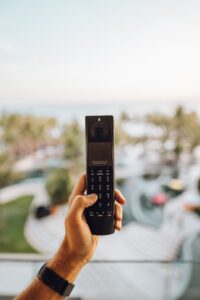
The growing dumb phone revival reflects a simple question: has smartphone convenience come at the cost of attention, privacy and time?
A modern smartphone can navigate you across a continent, pay your rent, unlock your front door, translate a menu in Lisbon, move money between accounts, and hold every photo you have ever taken of your children. It replaced a dozen separate objects with one slab of glass. By any reasonable measure, it has transformed everyday life more than almost any other consumer object of the last two decades.
And yet a small but visible number of people are giving parts of it up on purpose. They are buying phones that cannot open Instagram, cannot browse the web, and sometimes cannot even take a decent photo. Many of them could easily afford a newer, more capable phone. They are choosing something more limited instead. For them, more had quietly turned into a burden.
That contradiction sits at the center of this trend and it is worth taking seriously. Why would anyone trade a device that does everything for one that does almost nothing?
The comeback, and what it actually is
It helps to be precise about what is happening, because the headlines tend to overstate it. Most people who buy a basic phone still own a smartphone too, and only a small fraction give up their smartphone completely. What is actually growing is a cultural movement toward simpler, more limited technology, and phones are only the most visible part of it.
The same instinct shows up elsewhere. CDs and vinyl are selling again after two decades of decline, and film cameras are turning up on younger people’s wish lists instead of the latest phone camera. A common framing in coverage of the trend, especially its Indian variant, is that these objects offer control that digital defaults do not. A physical book has no pop ups. An offline music player forces an actual choice instead of an endless feed of recommendations.
The most cited number behind this trend claims that brick phone sales among 18 to 24 year olds in the United States jumped roughly 148 percent between 2021 and 2024, alongside a decline in smartphone use in that same age group. It is worth being clear about where that number comes from. It traces back to a single 2024 essay published in a minor open access outlet, and it has been repeated by outlet after outlet without anyone tracing it back to an actual sales tracker. No major device tracking firm publishes a matching figure. Treat this as a widely repeated claim rather than a confirmed one.
The sturdier evidence comes from Mintel, an independent market research firm with no stake in the outcome either way. Mintel technology analyst Joe Birch reports that nine out of ten phones sold today are still smartphones, and dumbphones remain a niche category. Apple and Samsung are not under any real threat. Birch’s research also found that roughly three in five Gen Z respondents say they would like to be less connected to the digital world, even though most of them have not acted on that wish by buying a different phone. That gap between what people say they want and what they are actually willing to give up tells us more about where this trend sits than any sales figure, confirmed or not. The real shift is in what people expect a phone to do for them. Ownership numbers barely move while expectations quietly change, whether someone ends up switching devices or not.
What people are actually trying to escape
Ask people why they switched and the answers cluster around a few themes, and none of them are really about the phone itself.
The first is notifications, specifically. A 2026 study published in Computers in Human Behavior had people complete a focus task while receiving smartphone style alerts, and found that each notification triggered a measurable slowdown in cognitive processing lasting about seven seconds. What predicted the size of that slowdown was not total screen time. It was how relevant the notification felt and how often the person habitually checked their phone. Multiply seven seconds by the dozens of notifications a typical phone sends in a day and the toll on sustained attention becomes easier to picture than the vague claim that phones are distracting.
The second is the shape of the device’s purpose. A phone used to be for calling people. Now it functions as an entertainment platform, an advertising platform, a shopping platform, and a social platform, all running through the same six inches of screen. Nothing about the hardware forces this. It happened because many of the platforms running on it are built around keeping you engaged a little longer than you intended, and notifications are simply the delivery mechanism for that ask, arriving all day, from a dozen different directions at once.
And the third is the erosion of a boundary the phone was supposed to help manage, the line between being at work and being off it. You can be technically off the clock and still reachable by your manager at nine at night, still expected to answer, still quietly working even while you are not working. An email gets answered, then Slack stays open in case something else comes in, then a group chat starts buzzing before Slack has even quieted down. There is no natural stopping point, because the same device that lets you finish one thing immediately offers you something else to start.
The attention economy, named plainly
Step back and a pattern emerges. For most of the platforms running on your phone, attention itself is the scarce resource being monetized. It gets resold to advertisers, sponsors, and other platforms competing for the same finite thing, the number of minutes you have in a day.
On engagement driven platforms, every notification is effectively a bid for that resource. Every autoplay video, every infinite scroll, every recommendation engine is tuned to keep you engaged a little longer than you intended. This is simply how the business model works. It gets paid per minute of attention it can hold, and it has worked extraordinarily well.
Seen this way, a dumb phone is a rejection of a specific market, the one built around capturing your attention and reselling it. A basic phone removes almost every app from that marketplace at once. That is a much stronger explanation for the trend than nostalgia alone. The smartphone was built to give people access to everything they could want. What people are increasingly asking is what all that access cost them in return.
The generation that grew up inside it
The people driving this trend are mostly not old enough to remember a world before smartphones. Gen Z, the first generation that never knew life without one, is among the most visible groups embracing it. The Mintel finding cited earlier, that three in five of them say they want to be less digitally connected, is the clearest evidence of that.
There is a real irony in that, even if it should not be overstated into the generation trying hardest to escape. A generation raised entirely inside the smartphone era is at least openly questioning it, which is not nothing. Part of what is driving this is straightforward digital fatigue. But part of it looks more like nostalgia for something they never had. Reporting on the trend has repeatedly noted that Gen Z buyers are drawn to Y2K era design, flip phones, and early 2000s aesthetics, chasing an analog childhood their generation is often assumed not to have experienced firsthand. Alongside both of these, opting out has quietly become a way to signal something about yourself, a point worth returning to later.
Older generations are drifting toward simpler phones too, usually for more practical reasons, bigger buttons, longer battery life, and a device that reliably does the one thing they need it for, which is making a phone call. The interest is coming from two directions at once, for two very different sets of reasons, even if the underlying market for either group remains small next to smartphones overall.
Friction as the actual feature
Whatever hardware limitations a basic phone has, its real function is to introduce friction between you and a decision.
On a smartphone, checking Instagram takes one motion, barely conscious. On a basic phone, it is simply not possible. There is no scrolling to resist, no willpower being tested every few minutes, because the option has been physically removed. That distinction matters more than it sounds like it should.
Software restrictions rely on you remembering a promise you made to yourself in a calmer moment. A basic phone does not ask you to remember anything. The app is not there. This is the difference between digital minimalism, which is about using technology deliberately, and something closer to digital abstinence, where certain choices are removed from the table entirely. A basic phone sits firmly in the second category, and for people who have tried and failed at willpower based limits, that is often exactly the point.
Anecdotal reports from people who have switched describe more face to face conversation, more willingness to talk to strangers while waiting somewhere, and more comfort sitting with nothing to do. Read closely, these reports point to a change in what fills the moments that used to get filled automatically. What that does to how someone feels overall is a separate, harder question.
Which points to something the smartphone quietly did. It made boredom optional. A bus stop, a waiting room, a red light, a queue at the pharmacy. These used to be small pockets of unstructured time. Some of them led nowhere. Others became a moment of noticing something, thinking about a problem sideways, or striking up a conversation with a stranger. On a smartphone, that time gets filled by default, instantly, without a decision being made. A basic phone changes what happens in those empty moments by removing the option to skip past them automatically, and that turns out to matter more than it sounds like it should.
The privacy question, and its limits
Privacy comes up constantly in these conversations, and there is something real underneath it. A smartphone generates a continuous stream of app level data, from location history to search queries to health and payment information. A basic phone produces far less of this, simply because it cannot run the apps that collect it.
That reduction is real, but it is also limited. Carriers can still see which cell towers a phone connects to and which numbers it calls. That is metadata about the call itself, separate from the content of it, and metadata alone can reveal a surprising amount about where and how someone uses a phone. A basic phone cuts off most app level tracking. Call and location metadata still gets collected regardless of which phone someone carries. Anyone who treats a basic phone as a privacy shield is overselling what it actually does.
What you give up, and whether you can
Here the story has to turn against itself, because otherwise it just reads as an advertisement.
Leaving a smartphone behind means losing real, useful things. Turn by turn navigation. Mobile banking. Ride hailing apps. QR code payments and digital tickets. Real time translation. A camera worth using. Two factor authentication, which increasingly assumes you have a trusted device on hand, whether through SMS codes, authenticator apps, or passkeys.
That last one turns out to be a serious obstacle, not a minor inconvenience. Many banks, workplaces, and online services now make smartphone based authentication part of the login process by default. This has produced an odd but increasingly common arrangement, a basic phone for daily life and a smartphone left at home, powered off or tucked in a drawer, brought out only when something absolutely requires it. People living this way often describe it as maintaining two separate identities, one built for actually living and one built for surviving the parts of modern life that assume a smartphone.
That compromise is probably the most realistic version of this movement, more so than the full, permanent switch that headlines tend to describe. People who try full abandonment usually run into something within days that they genuinely cannot do without a smartphone. Ordinary daily life increasingly assumes a smartphone by default, and that is what usually ends the experiment.
The smartphone, in other words, has stopped being a consumer product you can simply opt out of. In many places it now functions increasingly like infrastructure. Transport, banking, identity verification, and travel increasingly assume smartphone access by default, not as an option among several. Which raises a genuinely uncomfortable question. Can you actually opt out of a system that was never designed to let you?
Who can actually afford to disconnect
That question lands very differently depending on who is asking it.
For many people in emerging economies, a smartphone functions primarily as a bank, a business tool, an education platform, and often the only computer they own, well before it becomes a source of anxiety to be managed. India illustrates the other side of the equation well. A smartphone there routinely functions as a payment system, a business storefront, and a gateway to government services, which makes distraction a much smaller part of the story than it is elsewhere. Everyday systems in India, from UPI digital payments to public services to small businesses run entirely through WhatsApp, are increasingly built assuming a smartphone. Commentators covering the local version of this trend note that the analog revival still shows up there too, in renewed interest in printed books, instant film cameras, and wired earphones. Outright phone rejection is far less common than in the West, because the smartphone is doing more essential, non optional work in daily life there.
Even within wealthier countries, the ability to disconnect is not evenly distributed. A salaried professional can say their email will wait until tomorrow. A delivery driver, a gig worker, or someone juggling multiple part time jobs often cannot, because the apps that generate their income and coordinate their shifts run on that same phone. Digital minimalism quietly becomes a privilege for people whose jobs and social lives do not strictly require constant connectivity, and it stays out of reach for everyone else. That is also, in a smaller way, why choosing a basic phone can start to look like a status marker rather than a downgrade. For most of the smartphone era, more technology signaled more status, and a person who could easily afford the latest flagship but chooses a basic phone instead is now signaling something else, whether that is self control or simply enough stability to not need to be constantly reachable. Not everyone gets to make that choice. That is what turns the choice into a marker of privilege when someone does make it.
There is a safety dimension too, and it cuts against the romantic version of this story. A smartphone in an emergency offers GPS location, instant emergency calling, real time weather alerts, and the ability to summon help or share your location with someone who is worried about you. None of that is automatically safer to give up, and anyone weighing the switch should take that loss seriously, since simpler does not automatically mean safer.
The interpersonal cost
The most interesting parts of this trend are not really about the person holding the phone. They are about everyone around them, and about a social expectation that has shifted more than most people have noticed.
Two people at dinner with their phones face down on the table is a small, deliberate act, and the people who do it regularly describe conversations that run longer, silences that feel less urgent to fill, and boredom that becomes shared instead of solitary. The smartphone competes with the person sitting across from you at that table just as much as it competes with work for your attention, and that is a cost that rarely shows up in screen time statistics. The same instinct shows up in the work version of the switch. Leaving a work phone behind after hours draws a physical boundary that a single all purpose device makes hard to hold by habit alone.
What links both is a social contract nobody explicitly agreed to. Telling friends you do not check messages regularly, or that you are not on WhatsApp, used to sound unremarkable. Now it can sound almost confrontational, because constant availability has quietly become the default expectation, at work, in friendships, and in families alike. Choosing a basic phone amounts to saying out loud what a lot of people only think privately. It says they are no longer agreeing to be instantly reachable. That is a harder thing to say than simply installing a screen time app that nobody else can see.
The first phone, not the downgrade
Parents are increasingly delaying smartphone access for their kids, and schools have moved even faster. Twenty six states now have laws or policies restricting phone use during the school day, and twenty two of those were enacted in 2025 alone. Most of these laws passed in states with Republican controlled legislatures, but individual votes within those legislatures have often been lopsided across party lines, including near unanimous votes with Democratic lawmakers backing the bills. The pace itself is unusual for an education issue, regardless of which party controls a given statehouse.
The result is an unusual reversal. A basic phone or flip phone is becoming, for a new generation, the phone a teenager gets first, before they ever own a smartphone to give up. Whether that becomes the norm or stays a temporary bridge until the same teenager gets a smartphone anyway is still an open question, but it has turned childhood phone ownership into its own small battleground between parents, schools, and peer pressure, years before most of these kids will ever face the adult version of the same choice.
Where this is actually heading
Manufacturers have built parts of the dumb phone philosophy directly into their own software, choosing to absorb the trend into their products. Focus modes, app limits, notification summaries, grayscale displays, and digital wellbeing dashboards now let a smartphone track and cap its own usage. In effect, the industry is trying to sell you the experience of a basic phone without asking you to buy one, using tools you can turn off the moment they become inconvenient.
That points to where this is probably going. A selective phone is the more realistic outcome. It would be a device that keeps the parts people genuinely rely on, such as calls, maps, payments, and messaging, while stripping out the parts designed purely to capture attention, such as infinite feeds, autoplay, and algorithmic recommendation engines built to hold attention instead of provide value. A company whose revenue depends on engagement has little structural incentive to build a version of itself that reduces engagement. This does not rule out a selective phone entirely. It just means outside pressure, competition, or regulation will probably have to drive it, since the industry has little incentive to build it on its own.
The actual argument
Strip away the flip phones, the Nokia nostalgia, and the TikTok hashtags and a specific realization sits underneath all of it. Convenience has a price. For a growing number of people, that price has quietly gotten too high.
The smartphone solved the problem of access. It put maps, money, communication, and information into a single object in your pocket, and it did that job extraordinarily well. The problem people are grappling with now is different. The original smartphone was built to reach everything a person could want. It was never built to stop everything else from reaching back.
This description fits the dumb phone revival better than labels like digital detox or Gen Z nostalgia. Very few people are trying to disconnect from the internet or their smartphone completely. What most of them want is narrower and harder to fit into a headline. They want some distance from the parts of that phone built, deliberately and successfully, to ask for more of their attention than they ever meant to give.
