

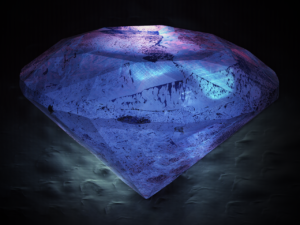
How Technological Abundance Is Severing Carbon from Geological Scarcity
Executive Summary
For much of the twentieth century, the diamond trade was shaped by a highly concentrated mining, distribution and marketing system led by De Beers. Driven by controlled supply, inventory management and sustained marketing, natural diamonds maintained an enduring status as a primary cultural symbol of romance, luxury, and emotional commitment.
Over the past decade, technological advancements in Chemical Vapor Deposition (CVD) and High-Pressure High-Temperature (HPHT) synthesis have enabled the commercial-scale production of gem-quality laboratory-grown diamonds (LGDs). These stones have essentially the same chemical, physical and optical properties as natural diamonds, although their growth histories can be distinguished by advanced gemological testing. In jewelry and several industrial applications, manufactured diamonds replace geological extraction with manufacturing costs associated with reactors, energy, capital, processing and yields, with output constrained primarily by manufacturing capacity, process economics and technical yields rather than by geological formation.
This shift has accelerated a structural market realignment across mining jurisdictions, manufacturing centers, retail pricing models, and consumer purchasing behavior. This analysis examines the structural economic drivers, wholesale price deflation, comparative gemological and manufacturing properties, and emerging market trajectories of the diamond sector.
1. The Old Scarcity System: Historical Monopolies and Marketing Architecture
The foundational economics of mined diamonds were historically shaped by concentrated institutional supply governance rather than atomized, open-market commodity competition.
1.1 The Centralized Supply Architecture
Following the discovery of extensive diamondiferous kimberlite pipes in Kimberley, South Africa, during the late 1860s, the rapid expansion of Kimberley production created a fragmented and volatile supply structure, encouraging consolidation of mining interests. The consolidation of claims by Cecil Rhodes and the formal incorporation of De Beers Consolidated Mines in 1888 created a powerful institutional structure that subsequently became central to the organization and marketing of the international diamond trade, as documented in corporate history archives preserved by the De Beers Group History.
For much of the twentieth century, De Beers and its associated selling system exercised substantial control over the flow of rough diamonds into major markets. Operating through the London-based Central Selling Organisation (CSO), the system supplied selected Sightholders through structured sales arrangements and term contracts while managing the release of rough diamonds into the market, as documented in corporate history archives by the De Beers Group History and commercial distribution records by De Beers Group Diamond Trading & Sightholder Sales. Sightholders purchased pre-allocated boxes under term contracts established by the selling organization. During periods of weak demand, the system could withhold surplus rough from the market, allowing supply to be adjusted in response to market conditions.
1.2 The Institutional Construction of Demand
The economic availability of diamonds has historically depended not only on geological occurrence, but also on the capital, infrastructure and institutions required to locate, extract, process and distribute them. Perceived scarcity was shaped by both genuine geological constraints and the historically concentrated systems through which rough diamonds were supplied and marketed.
To sustain retail demand, De Beers launched its first U.S. advertising campaign in 1939, helping strengthen the association between diamond engagement rings, permanence and romantic commitment in American consumer culture.
Manufactured production is governed by a different set of constraints: reactor capacity, capital, energy, process know-how and manufacturing yields rather than control of geological deposits.
2. How Diamonds Are Now Manufactured: Physics, Plasma, and Synthesis
Commercial diamond synthesis relies primarily on two distinct growth methods: High-Pressure High-Temperature (HPHT) and Chemical Vapor Deposition (CVD). Both processes can produce gem-quality single-crystal diamond with the fundamental chemical and physical properties of diamond, including an isometric crystal lattice, a refractive index of 2.417, a specific gravity of approximately 3.52, and a Mohs hardness of 10, as established by the Gemological Institute of America.
2.1 High-Pressure High-Temperature (HPHT) Growth
HPHT synthesis reproduces some of the high-pressure and high-temperature conditions under which natural diamonds form. HPHT systems use several press configurations, including cubic and BARS-type apparatuses, generating operational pressures of approximately 5.0 to 6.0 GPa (~50,000 to 60,000 atmospheres) and temperatures between 1,300°C and 1,600°C, according to research published by the Gemological Institute of America.
Inside a specialized ceramic capsule, a high-purity solid carbon feedstock (graphite) dissolves into a molten transition metal solvent-catalyst composed of iron, nickel, or cobalt alloys. Driven by a controlled thermal gradient, dissolved carbon migrates through the molten metal flux toward a cooler diamond seed, where it crystallizes into synthetic diamond.
2.2 Chemical Vapor Deposition (CVD) Growth
In contrast, CVD growth operates in a low-pressure, high-temperature metastable growth regime. A polished single-crystal diamond seed plate is placed inside a sealed vacuum chamber evacuated to low pressure / near-vacuum conditions, as detailed in research by the Gemological Institute of America CVD Research.
A carbon-bearing precursor gas, typically methane, diluted in high-purity hydrogen is introduced into the chamber. High-frequency microwave generators ignite a localized plasma ball directly above the substrate at temperatures roughly 700°C to 1,300°C, depending on reactor configuration and process conditions. The plasma dissociates methane into reactive carbon radicals while generating atomic hydrogen, which selectively etches away non-diamond sp2 carbon (graphitic soot) while allowing sp3 diamond carbon to deposit layer-by-layer onto the diamond seed plate.
2.3 Synthesis Methodology Comparison
| Operational Parameter | High-Pressure High-Temperature (HPHT) | Chemical Vapor Deposition (CVD) | Source Authority |
|---|---|---|---|
| Thermodynamic Regime | High Pressure, High Temperature | Low Pressure, High Temperature (Metastable) | GIA Research Criteria |
| Operational Pressure | 5.0 to 6.0 GPa (~50,000 to 60,000 atm) | Low pressure / near-vacuum | GIA Research Criteria |
| Operational Temperature | 1,300°C to 1,600°C | Roughly 700°C to 1,300°C | GIA Research Criteria |
| Carbon Feedstock | High-purity solid graphite | Methane gas (CH4) diluted in hydrogen (H2) | GIA Research Criteria |
| Growth / Activation Mechanism | Molten transition-metal flux | Microwave-plasma activation of carbon-bearing gas | GIA Research Criteria |
| Crystal Morphology | Cuboctahedral (cubic and octahedral faces) | Typically cubic/tabular growth forms associated with substrate orientation | GIA Research Criteria |
| Common Diagnostic Features | Metal-flux inclusions and characteristic growth patterns | Silicon-related defects, strain and characteristic growth patterns | GIA Research Criteria |
2.4 Gemological Identification Infrastructure
Because manufactured diamonds share the bulk physical properties of natural stones, the GIA grades them as diamonds with essentially the same chemical composition and crystal structure. However, GIA reporting systems explicitly differentiate laboratory-grown stones from natural diamonds based on diagnostic growth patterns, distinct lattice strain, and atomic-scale defect configurations.
Under the U.S. Federal Trade Commission Jewelry Guides (16 CFR Part 23), FTC guidance permits terms such as “laboratory-grown,” “laboratory-created” and “synthetic” when the product has essentially the same optical, physical and chemical properties as a mined diamond, provided its laboratory origin is clearly disclosed. Marketers remain prohibited from using unqualified descriptors that could mislead consumers regarding subterranean or manufactured origin.
3. The Price Collapse: Wholesale Deflation and the Cost-Plus Model
The transition from subterranean extraction to factory manufacturing changed the pricing dynamics of polished diamond inventory.
3.1 The Breakdown of Carat Scaling
For comparable quality characteristics, larger natural diamonds generally command higher prices per carat because gem-quality stones of larger size are rarer, a relationship documented in gemological rarity and value analyses by the Gemological Institute of America. In diamond synthesis, growing larger crystals requires longer cycle times and remains technically demanding due to defect formation, thermal gradients, and strain. However, factory cycle extension is fundamentally different from searching for geologically scarce large rough.
3.2 The Lightbox Benchmark and Wholesale Compression
The expansion of LGD production capacity coincided with a sharp decline in wholesale and retail prices. While scaling reactor installations was one significant structural mechanism, price declines were also driven by intensifying manufacturer competition and rapid process optimization. The commercial trajectory of De Beers’ Lightbox brand illustrates how rapidly LGD jewellery prices diverged from early linear pricing models:
- May 2018: De Beers launched Lightbox Jewelry with a flat retail price of $800 per carat, positioning LGD primarily as accessible fashion jewellery rather than as a direct substitute for natural diamond jewellery, as recorded in announcements from the De Beers Group.
- May 2024: In response to sustained price declines across the LGD jewellery sector, De Beers lowered standard Lightbox pricing to $500 per carat, as documented in company reports from the De Beers Group.
- May 2025: De Beers announced its intention to wind down Lightbox jewelry manufacturing, stating that wholesale lab-grown jewelry prices had fallen approximately 90% since the brand’s launch and were moving toward a cost-plus model, as reported in De Beers Group.
3.3 Retail Price Divergence
Current retail price tracking also shows a substantial separation between comparable laboratory-grown and natural diamonds. Across comparable carat weights, colors, and clarities in round brilliant stones, laboratory-grown diamonds trade at a substantial discount compared to natural mined equivalents, as tracked across hundreds of thousands of retail listings by The Diamond Price Index. While transaction prices vary across retail platforms, stone specifications, and market segments, the retail price divergence between comparable lab-grown and mined stones underscores the growing economic separation between manufactured inventory and geologically constrained supply.
4. What Actually Changes: Retail Economics and Consumer Realities
The rapid decline in wholesale manufactured diamond prices has reshaped the retail landscape, creating divergent incentives for jewelry retailers and consumers.
4.1 Comparative Product and Economic Profile
| Product Dimension | Natural Mined Diamond | Laboratory-Grown Diamond | Evidentiary Basis |
|---|---|---|---|
| Material Identity | Natural carbon diamond crystal | Synthetic carbon diamond crystal | GIA Gem Encyclopedia (Diamond Description) |
| Nitrogen Classification | Predominantly Type Ia in natural diamonds | Type IIa is common in colorless CVD; HPHT products show a wider range of nitrogen-related signatures | GIA natural-diamond type research and GIA CVD research |
| Primary Cost Constraint | Mining economics, including ore quality, depth, energy and mine operations | Manufacturing economics, including reactor utilization, energy, yields and capital | Analytical synthesis from mining and manufacturing sources |
| Wholesale Price Trend | Subject to cyclical supply adjustments | Sharp decline (~90% drop from 2018 to 2025) | De Beers Group Financial Announcements |
| Observed Positioning | Natural diamonds continue to be marketed around rarity, provenance, heritage and luxury | LGDs are marketed around affordability, fashion and value within a given budget | De Beers, Euromonitor & Signet |
| Secondary Market Evidence | Published secondary-market transaction data remain limited; resale offers can differ materially from original retail prices | Published secondary-market transaction data remain limited; resale offers can differ materially from original retail prices | Industry market observations |
4.2 Retailer Economics: Percentage Margin vs. Absolute Dollar Realization
Industry-wide margin comparisons are complex because published figures vary by market level, quality, retailer and period. The more robust observable trend is the sharp decline in LGD prices as production capacity expanded.
Major jewelry retailers, including Signet Jewelers, have expanded their lab-grown offerings across bridal and fashion categories, catering to shifting consumer purchase criteria. For retailers, falling LGD prices create a different revenue equation: as wholesale prices move toward production costs, lower ticket values can reduce gross-dollar contribution per sale; De Beers’ June 2026 report similarly notes that falling LGD prices may make upselling harder and could affect long-term gross profits, as published in The Diamond Report, June 2026.
4.3 Consumer Purchasing Patterns and Resale Realities
According to market research by Euromonitor International, the United States accounted for approximately 70% of global retail lab-grown diamond jewelry sales in 2024. Two recurring motivations help illustrate the changing consumer economics:
- Carat-per-Dollar Optimization: One recurring economic appeal is the ability to purchase a larger stone within a fixed budget. At a given budget, the lower price of an LGD can allow a consumer to choose a larger stone, prioritizing visual presence and design flexibility.
- Sentimental and Origin Preferences: De Beers’ research indicates that natural diamonds continue to hold strong preference among surveyed U.S. consumers, while LGDs represented 15% of independent jewelers’ diamond sales by value in 2025, versus 85% natural diamonds, as published in The Diamond Report, June 2026. The distinction indicates that origin remains an important attribute differentiating the two categories.
Published secondary-market transaction data for both natural and laboratory-grown diamonds remain limited. In both categories, resale offers can differ materially from original retail purchase prices, and continued declines in new manufactured stone prices put downward pressure on the price benchmarks against which LGD resale offers are evaluated.
5. A More Segmented Market: Structural Realignment and Sovereign Exposure
Rather than a single unified market, the global diamond trade is becoming increasingly segmented, with a manufactured consumer market alongside differentiated natural-diamond luxury and collector segments.
5.1 The Emerging Market Structure
| Structural Market Segment | Primary Product Profile | Primary Value Driver | Target Consumer Demand |
|---|---|---|---|
| Manufactured Fashion & Bridal | Polished lab-grown diamonds (CVD / HPHT) | Manufacturing scalability and declining production costs | Value bridal, fashion jewelry, self-gifting |
| Certified Natural Luxury | Certified natural diamonds with verified origin | Geological rarity, provenance, cultural symbolism | Traditional bridal, heritage luxury, milestone gifts |
| Elite Auction & Collector Rarity | Exceptional natural stones, fancy colors | Exceptional geological rarity and historic provenance | High-net-worth collectors, international auctions |
5.2 Macroeconomic Exposure in Southern Africa
The macroeconomic consequences are particularly significant for diamond-dependent developing economies, with Botswana providing a particularly clear example.
According to the Kimberley Process 2025 Annual Global Summary Tables, total reported worldwide rough diamond production reached 105,689,848 carats valued at $10,528,747,979, with an average price realization of $99.62 per carat across all reporting participants. The table below details production for selected major natural diamond producing nations representing approximately 85% of the reported global production value.
Selected Major Natural Diamond Producers, 2025
| Producer Country | 2025 Production (Carats) | 2025 Production Value (USD) | Calculated Average Value / Carat |
|---|---|---|---|
| Russian Federation | 31,511,942.00 | $2,724,463,193.00 | $86.46 |
| Republic of Botswana | 15,495,829.00 | $1,978,204,562.00 | $127.66 |
| Republic of Angola | 15,195,293.00 | $1,811,575,243.07 | $119.22 |
| Canada | 14,103,511.00 | $892,505,366.39 | $63.28 |
| Democratic Republic of Congo | 8,913,219.39 | $44,629,428.44 | $5.01 |
| Republic of South Africa | 5,572,541.71 | $598,631,239.28 | $107.43 |
| Republic of Namibia | 2,098,129.20 | $721,497,198.43 | $343.88 |
| Kingdom of Lesotho | 695,888.15 | $230,270,828.94 | $330.90 |
(Data source: Official participant statistical submissions compiled by the Kimberley Process Statistics for the full-year 2025 reporting cycle. Average value per carat calculated directly from official participant production volume and value).
The Republic of Botswana illustrates the fiscal stakes of this transition. Through Debswana, an equal joint venture between the government of Botswana and De Beers, diamond revenues have historically been a major source of export earnings and government revenue. The IMF reported that diamonds had accounted for almost 90% of Botswana’s goods exports over the preceding decade and roughly one-third of fiscal revenues, underscoring the country’s exposure to the diamond market, as documented by the International Monetary Fund.
The World Bank’s April 2025 Macro Poverty Outlook subsequently reported that the diamond downturn contributed to a 3.0% contraction in Botswana’s GDP in 2024, with mining output contracting 24.1% and fiscal buffers eroding, underscoring the urgency of accelerating national economic diversification as documented by the World Bank Macro Poverty Outlook.
5.3 Global Supply Projections
Natural-diamond supply faces finite geological limits, while actual production will continue to depend on mine economics, operating decisions, mine life and market demand, as noted in operational guidance by the De Beers Group. Global rough-diamond production is forecast to decline over the coming years, with 2026 production guidance set at 21 to 26 million carats, although the pace will depend on operational choices and market conditions.
6. The Technological Frontier: Semiconductors, Thermal Management, and Quantum Sensing
The long-term disruption of the diamond trade extends beyond decorative adornment. Several physical properties of diamond, particularly its thermal conductivity, hardness and electronic characteristics, make synthetic diamond relevant to advanced industrial, electronic and quantum applications.
According to the U.S. Geological Survey Mineral Commodity Summaries (2026), synthetic diamond already accounts for virtually all (more than 99%) global industrial diamond production and consumption, primarily in mechanical cutting, drilling, and grinding, with global synthetic industrial diamond output exceeding 15 billion carats. The emerging frontier is the expansion of synthetic single-crystal diamond beyond mechanical abrasives into semiconductor and quantum applications:
- Thermal Management in High-Density Computing: As processor power density rises, thermal management becomes an increasingly important engineering constraint. High-quality diamond has thermal conductivity several times that of copper, reaching levels of up to roughly 1,000 to 2,200 W/(m·K) in single-crystal material. Integrating thin synthetic diamond heat-spreaders directly into high-power electronics and AI/HPC accelerator packages can improve heat spreading and thermal management in emerging high-density computing assemblies, as documented by Element Six.
- Ultra-Wide Bandgap Power Electronics: Diamond possesses an ultra-wide electronic bandgap of 5.47 eV and a high critical electric breakdown field of approximately 10 MV/cm. Combined with its other electronic transport properties, diamond has exceptionally high theoretical figures of merit for high-voltage and high-frequency power electronics, exceeding calculated values for silicon, silicon carbide and gallium nitride, as established in semiconductor physics research by Tsao et al. in Advanced Electronic Materials, though commercial deployment remains constrained by substrate dimensions, wafer processing costs, and device fabrication challenges.
- Quantum Information and Magnetometry: Specific point defects engineered into the synthetic diamond crystal lattice, particularly the nitrogen-vacancy (NV⁻) center, possess electron spins that can be initialized, manipulated, and read out via optical lasers at room temperature. These centers enable quantum sensing applications, including research into biomagnetic measurements such as magnetocardiography, as well as quantum networking and computing research supported by Element Six.
This technological potential explains the corporate restructuring within legacy diamond firms. In winding down Lightbox jewelry manufacturing, De Beers retained Element Six’s exclusive focus on industrial synthetic-diamond applications, centralizing CVD production and expanding industrial partnerships, as documented by De Beers Group. Element Six has focused on industrial partnerships, including collaboration with technology firms such as Bosch to develop diamond quantum magnetometers. The same crystalline material associated with decorative luxury is increasingly being engineered for thermal-management, semiconductor and quantum applications.
7. Conclusion: The Decoupling of Carbon from Scarcity
The transformation of the diamond trade illustrates the profound impact of technology on markets historically organized around geological rarity.
When manufacturing technology can reproduce the material properties that once depended on geological formation, scarcity no longer operates in the same way as it did before. The result is not the disappearance of natural diamonds, but a separation of markets: manufactured diamonds increasingly compete on price, consistency and utility, while natural-diamond marketing increasingly emphasizes scarcity, provenance, symbolism, design and history as differentiating attributes.
The laboratory has not made the natural diamond obsolete. It has changed how scarcity operates in the market. Synthetic diamond also has important long-term opportunities beyond luxury adornment, including high-frequency electronics, thermal management and quantum sensing.
Primary Sources & Evidence Notes
- De Beers Group: Our History & Heritage Since 1888. Corporate historical archive documenting the 1888 incorporation, claim consolidations under Cecil Rhodes, 1939 first U.S. advertising campaign, and Central Selling Organisation governance. Available via De Beers Group History.
- De Beers Group: Diamond Trading & Sightholder Sales. Documents commercial sales mechanisms, Sightholder term contracts, ten annual Sight events, and Global Sightholder Sales allocations. Available via De Beers Group Diamond Trading & Sightholder Sales.
- De Beers Group: De Beers Group Launches New Company, Lightbox Jewelry (29 May 2018). Documents initial linear pricing model ($800/ct flat retail) and fashion jewellery positioning for laboratory-grown jewelry. Available via De Beers Group News.
- De Beers Group: Lightbox Updates Pricing Strategy (May 2024). Details standard price reduction to $500/ct in response to sector price declines. Available via De Beers Group Announcements.
- De Beers Group: De Beers Group announces intention to close Lightbox business (8 May 2025). Documents decision to wind down Lightbox jewelry manufacturing, reporting ~90% wholesale price decline in LGD jewelry, movement toward cost-plus model, and retention of Element Six’s industrial focus. Available via De Beers Group Press.
- De Beers Group: The Diamond Report, June 2026 (June 2026). Reports 2025 natural-versus-synthetic sales shares among U.S. independent jewellers and consumer purchase-price data, tracking LGD share at 15% of independent jewelers’ diamond sales by value in 2025 (versus 85% natural diamonds). Available via De Beers Group Reports.
- De Beers Group: Interim financial results for 2026 (2026). Documents rough production forecast declines and 2026 production guidance of 21 to 26 million carats. Available via De Beers Group Financials.
- Element Six: Thermal Management. Accessed October 2026. Details single-crystal and polycrystalline diamond thermal conductivity (1,000–2,200 W/mK) and heat-spreader applications for GPUs, HPC, and RF devices. Available via Element Six Thermal Management.
- Element Six: Unlocking real-world impact with diamond quantum technologies (24 September 2026). Details NV-center quantum magnetometers, room-temperature spin manipulation, Bosch partnership, and scalable manufacturing. Available via Element Six Quantum.
- Euromonitor International: Lab-Grown Diamonds: A Market Revolution or a Passing Trend? (February 2025). Documents the United States accounting for approximately 70% of global LGD jewellery sales in 2024. Available via Euromonitor International.
- Gemological Institute of America (GIA): Diamond Description (GIA Gem Encyclopedia). Establishes standard gemological constants, including refractive index (2.417), specific gravity (3.52) and Mohs hardness (10). Available via GIA Gem Encyclopedia.
- Gemological Institute of America (GIA): About Diamond Carat Weight (GIA 4Cs). Establishes the relationship between carat weight, geological rarity and price per carat. Available via GIA About Diamond Carat Weight.
- Gemological Institute of America (GIA): Observations on CVD-Grown Synthetic Diamonds: A Review, Gems & Gemology, Vol. 52, No. 3 (Fall 2016). Documents low-pressure CVD growth at 700–1,300°C, microwave-plasma activation, low-nitrogen Type IIa characteristics in many near-colorless CVD samples, and gemological identification criteria. Available via GIA CVD Research.
- Gemological Institute of America (GIA): Observations on HPHT-Grown Synthetic Diamonds: A Review, Gems & Gemology, Vol. 53, No. 3 (Fall 2017). Establishes HPHT growth parameters (5–6 GPa, 1,300–1,600°C), solvent-catalyst metal flux, and morphological characteristics. Available via GIA HPHT Review.
- International Monetary Fund (IMF): Republic of Botswana: 2024 Article IV Consultation Staff Report, IMF Country Report No. 24/258 (September 2024). Documents diamond export share of almost 90% of goods exports over the preceding decade and sovereign fiscal revenue exposure. Available via IMF eLibrary.
- Kimberley Process (KP): Global Rough Diamond Production and Trade Summary Statistics by Participant Country (Official full-year 2025 datasets covering Russia, Botswana, Angola, Canada, South Africa, DRC, Namibia, Lesotho); and Annual Global Summary Tables (2025). Documents global rough production (105.69M carats, $10.53B value) and country outputs. Available via Kimberley Process Data.
- Signet Jewelers Ltd.: FY25 Q4 Earnings Call Transcript (2025). Documents expansion of lab-grown diamond offerings, particularly in fashion jewellery, and management commentary on AUR and margins. Available via Signet Jewelers Investors.
- The Diamond Price: Diamond Price Index / Live Retail Price Tracker. Current retail listing data used to compare natural and laboratory-grown diamond prices across daily tracked listings. Available via The Diamond Price Index.
- Tsao, J.Y. et al.: Ultrawide-Bandgap Semiconductors: Research Opportunities and Challenges, Advanced Electronic Materials, Vol. 4, No. 1, 1600501 (2018). Provides authoritative semiconductor physical constants for single-crystal diamond, including 5.47 eV bandgap, ~10 MV/cm critical electric breakdown field, and Baliga’s figure of merit. Available via Advanced Electronic Materials.
- U.S. Federal Trade Commission (FTC): Guides for the Jewelry, Precious Metals, and Pewter Industries, 16 CFR Part 23 (§ 23.25: Misuse of the word “diamond” and disclosure of laboratory-created diamonds). Establishes permissible terminology (“laboratory-grown,” “laboratory-created,” “synthetic”) and mandatory disclosure rules. Available via FTC Legal Guides.
- U.S. Geological Survey (USGS): Mineral Commodity Summaries 2026: Diamond (Industrial) (U.S. Geological Survey, Reston, VA, January 2026). Establishes >99% synthetic share of global industrial diamond production and consumption and >15 billion carat manufactured output. Available via USGS Mineral Publications.
- World Bank Group: Botswana Macro Poverty Outlook (April 2025). Direct country report documenting the 3.0% GDP contraction in 2024, 24.1% mining contraction, almost 90% diamond export dependence, and erosion of fiscal buffers. Available via World Bank Macro Poverty Outlook.
