

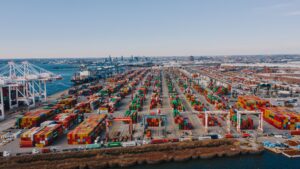
Why Geography Is Beating Globalization Again
Geography was supposed to stop mattering. Container shipping, free trade agreements, and the internet promised a world where a company could build almost anywhere and sell everywhere. For a while, that promise held. Today it is quietly being reversed. Businesses are rediscovering something globalization seemed to erase: location still matters, and it is starting to matter more than price.
For three decades, companies built their strategy around a single question: where is it cheapest to produce? That question shaped where factories were built, which countries got investment, and how products moved around the world. It produced the global economy most of us grew up with, one built on distance, scale, and low labor costs.
That question has changed. Executives today are more likely to ask where it is safest, fastest, and most reliable to produce. The world spent thirty years optimizing for cost. It is now optimizing for reliability. That single change, from cost to reliability, explains far more of the current economic moment than most headlines about deglobalization suggest, and it is worth understanding exactly how it happened.
This is not a story about globalization ending. Trade is not shrinking. Companies still buy parts from overseas, still ship goods across oceans, still rely on foreign suppliers for things they cannot make at home. What is changing is the logic underneath all of it.
The logic that built the old system
To understand why this shift matters, it helps to remember why the old system worked so well for so long, and how fast it grew.
After China joined the World Trade Organization in 2001, its share of global manufacturing output climbed from roughly 6 percent to close to 28 percent by the early 2020s, based on figures from the UN and World Bank that vary slightly by year and methodology but tell a consistent story. China overtook the United States to become the world’s largest manufacturer around 2010 and has extended that lead every year since. Tariffs fell across the board, and companies embraced just in time inventory, holding as little stock as possible and trusting that suppliers would deliver exactly what was needed, exactly when it was needed. Supply chains stretched across continents because distance no longer carried much risk. Container ships were cheap, ports were efficient, and disruptions were rare enough to ignore.
This system rewarded specialization. A factory in one country could focus entirely on one component, ship it halfway around the world, and still come out cheaper than building it locally. Lowest cost sourcing became the default strategy, not because executives were careless, but because the numbers consistently supported it.
For a long time, the model worked exactly as intended. Products got cheaper. Choice expanded. Companies that resisted globalization often struggled to compete with those that embraced it fully.
The disruptions that exposed the weak point
No single event ended this era. Instead, a series of shocks arrived close enough together that companies could no longer treat disruption as a rare exception.
The pandemic shut down factories and ports at the same time demand for goods spiked. The war in Ukraine disrupted energy and food supplies across Europe. Attacks on shipping in the Red Sea forced vessels onto longer, more expensive paths around Africa, and the volume of trade passing through the Suez Canal fell by roughly half in the first two months of 2024 compared with a year earlier, a decline that deepened further as the year went on. Tensions between the United States and China turned semiconductors, once a purely commercial product, into a matter of national security, starting with export controls in October 2022 that restricted the sale of advanced chip technology to Chinese manufacturers and expanding through several further rounds of restrictions in the years since.
None of these events were connected to one another. Yet they all exposed the same underlying weakness. A supply chain built entirely around efficiency had become fragile by design, because shock absorption was the very thing efficiency had eliminated.
Executives noticed. Boards noticed. And slowly, the question companies asked about their supply chains began to change.
Reliability becomes the new currency
This is the center of the shift. Companies increasingly value resilience, delivery certainty, political stability, shorter transport routes, and having more than one supplier for critical parts.
None of this means cost stopped mattering. It means cost is no longer the only variable that decides where something gets built. Picture two factories making the same part. One costs eight percent more to run. The other is cheaper but sits one earthquake, one export ban, or one political dispute away from going dark. That tradeoff is what more companies are now weighing explicitly, and the examples below show what it looks like when they choose the first factory.
This is a genuine change in how businesses calculate risk. For years, a disruption at a single supplier was treated as bad luck. Now it is treated as a design flaw. Companies that once prized a single, highly optimized supply chain are deliberately building in redundancy, even though redundancy costs money and reduces efficiency. They are choosing to pay for insurance they hope never to use.
Apple has spent years pushing suppliers to open production lines in India and Vietnam, not because labor there is dramatically cheaper than in China, but because single country dependence had become a risk the company was no longer willing to carry. Intel and TSMC have both committed to building fabrication plants on new continents for the same reason. Reliability, not cost, is now the variable driving decisions of that size.
Geography, trust, and trade
This is the idea that ties the rest of the article together, so it is worth stating plainly before moving further. Companies increasingly prefer suppliers based in countries with similar regulations, stable legal systems, reliable courts, and predictable politics.
This is not sentiment. It is risk management. A contract is only as good as the legal system that enforces it. A shipment is only as reliable as the political relationship between the two countries it crosses. As companies rebuild their supply chains, they are quietly favoring partners they can predict over partners who simply offer the lowest price.
This is why the real chain of cause and effect looks less like geography leading directly to distance, and more like geography leading to trust, which then leads to trade. Two countries can sit at similar distances from a market and still be treated completely differently by the companies deciding where to build, because one offers legal predictability and the other does not. Trust has quietly become as important a location factor as ports or highways, even though it never appears on a map. Everything that follows, from nearshoring to industrial policy to consumer prices, is downstream of this one shift in how companies weigh trust against cost.
Geography turns into strategy
Once reliability becomes the priority, location stops being a background detail and becomes a decision that shapes the entire business.
This is where nearshoring and friendshoring come in. Mexico has become the clearest example. It overtook China in 2023 to become the largest single source of goods imported into the United States, and by 2024 its share of the American import market had grown to 15.5 percent, ahead of China’s 13.4 percent, up from a near tie between the two countries as recently as 2017. Vietnam and India have drawn factories looking for an alternative to China without giving up low labor costs. Eastern European countries have become production hubs for companies serving the European Union, close enough to deliver quickly and politically aligned enough to feel dependable.
None of these countries are competing purely on price anymore. They are competing on proximity, political stability, and trust. A factory two weeks away by ship carries a different kind of risk than a factory two days away by truck, even if the second factory costs more to run.
Capital follows the same path
Where factories move, investment eventually follows. This is one of the less visible parts of the story, but it may be the most consequential.
Capital rarely moves alone. It brings suppliers, logistics companies, skilled workers, universities, and housing demand with it. The clearest evidence sits at the US-Mexico border itself. The Laredo port of entry, a single land crossing in Texas, handled 339.7 billion dollars in trade in 2024, enough to rank it among the top ports of entry in the entire United States for the year, ahead of most of the country’s largest seaports. It has become one of the busiest trade points in North America simply because it sits on the most direct route between Mexican factories and American customers.
This matters because infrastructure investment tends to lock in advantages for decades. A country that attracts a wave of factories today is likely to attract the suppliers, logistics firms, and skilled workers that follow those factories tomorrow, the way Laredo’s role kept growing once the trucks started coming. Geography compounds over time.
Why geography reinforces itself
This compounding effect deserves its own explanation, because it is the reason geographic advantages tend to snowball rather than stay small.
One factory rarely arrives alone for long. It needs component suppliers nearby, so suppliers follow. Those suppliers need skilled labor, so workers relocate and training programs open. Universities respond by building programs suited to the industry taking root. Local investors and venture capital start funding startups that serve the same supply chain. Eventually a region that started with one manufacturer ends up with an entire ecosystem built around it.
This is exactly what happened around Shenzhen for electronics manufacturing and around Taiwan for semiconductors, where TSMC did not just build factories but pulled an entire supporting industry into orbit around it. Industry reporting suggests a smaller version of the same pattern taking shape in places like Guadalajara and northern Vietnam, as suppliers connected to Tesla, Foxconn, and Nvidia begin clustering near one another rather than staying spread across the globe. A single company choosing a location can end up deciding the economic future of an entire region.
Governments decide to get involved
For much of the globalization era, governments mostly stayed out of the way and let markets choose where things got built. That has changed, and not only through subsidies.
The clearest example is the CHIPS Act in the United States, which set aside 39 billion dollars to bring semiconductor manufacturing back onto American soil. By the start of 2025, the government had committed up to 30.7 billion dollars of that fund to nineteen companies across forty separate fab projects, covering everything from leading edge logic chips to the mature, everyday chips used in cars and appliances. The European Union has pursued a similar strategy with its own chips act, and subsidies for electric vehicles and battery production are steering investment toward specific countries in much the same way. Tariffs, once treated as a relic of an earlier economic era, have returned as a routine policy tool across the political spectrum, and governments now compete for factories the way companies compete for customers, using tax credits and faster permitting as their pitch.
Semiconductors, batteries, pharmaceuticals, and rare earth processing have all been reclassified, in practice if not always in law, as strategic industries rather than ordinary commercial ones, the way national defense has always been treated as too important to leave to the lowest bidder. The effect is a market that behaves less like a single global system and more like a set of national and regional systems that occasionally trade with each other.
Energy, water, and talent still set the floor
Reliability does not stop at the factory door. It extends to everything the factory depends on to keep running, and two recent events show exactly how.
In 2021, a historic winter storm knocked out power across Texas and forced Samsung to shut down its Austin chip plant for more than a month, a closure the company later said cost it roughly 270 million dollars in lost wafers and production time. That same year, Taiwan’s worst drought in decades pushed TSMC to truck in water by the tanker load to keep its fabs running, after its factories alone were already using more than 150,000 metric tons of water a day. Neither company lost its facility to a competitor or a tariff. Both lost weeks of production to the ground beneath their own factories.
Talent has followed a similar pattern without the dramatic headlines. Remote work did not eliminate the importance of location, as many predicted it would, and companies still compete fiercely for regions with strong engineering talent and skilled manufacturing labor. Together, energy, water, and talent form a second layer of geography that matters just as much as proximity to customers. A location can be close to a major market and still lose out if it cannot power a factory, supply it with water, or staff it.
Consumers feel the cost of resilience
None of this is free, and the bill eventually lands on consumers.
Extra inventory costs money to store. Maintaining a backup supplier instead of relying on one efficient source costs money to manage. Building a second factory instead of maximizing output from a single plant costs money to construct. How much of a given price increase traces back to this kind of resilience spending versus ordinary inflation is difficult to isolate cleanly. What is easier to observe is the shift in how companies talk about it. A decision that used to be framed as a temporary buffer against short term shortages is now increasingly framed as a permanent feature of how the business runs, a standing cost rather than an emergency one.
At the same time, many consumers are actively choosing this trade off. Interest in local food, domestic manufacturing, and country of origin labeling has grown alongside a broader desire for transparency in supply chains. Buying local has become a small, personal version of the same resilience strategy that companies are pursuing at scale.
Winners, losers, and the new map
This shift is creating clear winners. Mexico, India, Vietnam, Indonesia, and Poland have all positioned themselves to benefit from companies moving production closer to major markets or diversifying away from single country dependence. Vietnam offers a clean illustration of the scale involved. Foreign investment actually disbursed into the country reached a record 25.35 billion dollars in 2024, up nearly 10 percent from the year before, with manufacturing absorbing the large majority of it. India shows a similar pattern in a single product line. Apple’s iPhone exports out of India hit a record 12.8 billion dollars in 2024, up 42 percent from the year before, as the country’s share of global iPhone production climbed from the low teens into the high teens in a single year. Smaller economies like Singapore and the UAE are thriving not by becoming manufacturing giants, but by becoming trusted connectors between regions.
The challenges fall on countries and industries built entirely around the old model. Nations that depended on being the cheapest possible option, with little else to offer, are finding that price alone is no longer enough to win business. Businesses that built their entire strategy around long, single source supply chains are discovering how expensive that fragility can become when conditions shift even slightly.
Even within countries, this plays out at the city level. Certain cities are becoming winners simply because of what surrounds them, including nearby ports, reliable energy, skilled labor, and strong transport corridors. Geography now operates at a much finer resolution than it used to. It is not just which country a company chooses. It is which city, which port, and which power grid.
Globalization is not ending. It is splitting.
Put all of this together and a clearer picture emerges. The global economy is not retreating into isolated national markets. It is reorganizing into overlapping regional systems, built around trust and proximity rather than pure cost.
North America is deepening its own manufacturing and trade relationships. Europe is doing the same within its borders and immediate neighbors. Asia is forming its own regional supply networks centered on countries like Vietnam, India, and increasingly, parts of the Middle East. Trade between these regions continues, sometimes at enormous scale, but the deepest, most reliable trade relationships are increasingly happening within them rather than across all of them equally.
Tariffs and industrial policy have become more common, but the better word for what is happening is redesign rather than retreat. Companies are not abandoning the idea of a global economy. They are building a version of it with more redundancy, more regional depth, and less dependence on any single country or route.
Conclusion
For decades, companies believed technology had defeated geography. Instead, technology merely hid its importance for a while. Every chip still needs a factory. Every battery still needs minerals pulled out of the ground somewhere specific. Every shipment still crosses a real border, subject to real politics and real risk.
The next disruption probably will not look like the last one. It may be a shipping lane closed by conflict rather than weather, a drought that hits a chip cluster instead of a farm belt, or a political dispute that cuts off a mineral rather than a product. Companies that spent the last few years building redundancy will absorb whatever it turns out to be. Companies that kept optimizing purely for cost will be relearning, in real time, the lesson this article has been describing all along, that the cheapest location and the best location stopped being the same place.
