

The Chemistry, Biology and Physics Behind What We Eat Every Day
1. The Anatomy of a Slice of Toast
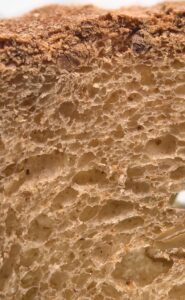
A slice of bread on a breakfast plate appears completely still, but that appearance reflects a temporary stage in a longer physical process.
The slice is an open-cell solid foam, the structural residue of a coordinated series of physical, chemical, and biological events. Yeasts multiplied through the moist dough matrix, metabolizing simple carbohydrates and releasing pockets of carbon dioxide. In the heat of an oven, those gas pockets expanded, water vapor flashed into steam, and gluten proteins stretched before setting into permanent walls. At the same time, starch granules absorbed available water, swelled, and gelatinized to form the crumb. At the surface, where water evaporated and temperatures rose, Maillard reactions and other heat-driven transformations generated the darker color, aroma, and brittle texture of the crust.
Treating food as merely an assembly of ingredients overlooks this physical reality. An egg, a bowl of rice, a carton of milk, a fermenting batter, or an apple on a cutting board is in a state of ongoing physical and chemical transition. What sits on the table is shaped by five interacting forces: heat, water, oxygen, microbes, and time.
Examining these everyday items reveals an intricate domestic landscape governed by thermodynamics, colloid chemistry, and microbiology. Culinary traditions developed by working within these natural laws.
2. The Chemistry of the Crust: Maillard Reactions and the Cost of Flavor
Heat and water dictate the boundary where bread ends and crust begins.
One of the principal mechanisms behind this transformation is the Maillard reaction, first described in 1912 by Louis-Camille Maillard. It is distinct from caramelization. Caramelization involves the complex thermal degradation, fragmentation, and condensation of sugars in the absence of amino compounds. The Maillard reaction, by contrast, begins when the unprotonated amino group of an amino acid or protein attacks the carbonyl carbon of an open-chain reducing sugar.
As detailed in a comprehensive review of Maillard reaction mechanisms and influencing parameters, the initial condensation yields an unstable glycosylamine, which dehydrates into a Schiff base. Molecular rearrangement turns this base into an Amadori or Heyns intermediate. From this junction, the pathway divides. At cooking temperatures, these intermediates fragment into reactive dicarbonyl compounds and undergo Strecker degradations.
In Strecker degradation, dicarbonyls react with alpha-amino acids, producing carbon dioxide and specific volatile aldehydes:
- Phenylalanine yields phenylacetaldehyde, which contributes floral notes.
- Methionine yields methional, contributing savory, potato-like aromas.
- Leucine and isoleucine produce branched aldehydes that lend toasted, malty characteristics.
These molecules condense with other intermediates into heterocyclic rings containing nitrogen and sulfur, such as pyrazines and oxazoles, before polymerizing into complex brown pigments known as melanoidins.
Water exerts primary control over the pace of these reactions. While liquid water is abundant at the surface, evaporative cooling limits the surface temperature. Once the exterior dries out, surface temperatures climb past the threshold required for rapid browning, generating the familiar dry crust.
The same chemistry also creates complex questions for food safety. When the free amino acid asparagine reacts with reducing sugars under high-temperature, low-moisture conditions, the reaction can form acrylamide. According to the EFSA Scientific Opinion on Acrylamide in Food, acrylamide in food potentially increases the risk of developing cancer for consumers across all age groups, though evidence from human epidemiological studies remains limited and inconsistent. Because these pathways are chemically linked to standard browning, industrial and regulatory approaches focus on managing precursor levels, such as free asparagine, and moderating cooking temperatures rather than attempting to eliminate the reaction entirely.
3. Cellular Rupture and the Enzymatic Clock
Browning can also proceed without heat, governed instead by oxygen and time on any kitchen cutting board.
Slice an apple or peel a raw potato, and the exposed surface can begin to darken to an amber hue within minutes. The catalyst here is biological, set off the moment cellular compartments are breached.
Living plant tissues maintain physical boundaries between enzymes and their substrates. In an extensive review of polyphenol oxidase and its substrates by Tilley et al., enzymatic browning is shown to initiate through polyphenol oxidase (PPO), a copper-containing enzyme family widely distributed across plants. In undamaged cells, PPO and its phenolic substrates, such as chlorogenic acid and catechins, are kept in separate cellular compartments.
Mechanical damage from cutting, crushing, or biting disrupts this compartmentalization. Phenolic compounds spill into the cytoplasm, encountering PPO in the presence of atmospheric oxygen. PPO oxidizes these phenols into reactive o-quinones, which then polymerize non-enzymatically with surrounding amino acids and proteins to form dark melanin pigments over time.
In growing plants, this process contributes to defense. When plant tissue is damaged, oxidized phenolic polymers help seal damaged surfaces and discourage microbial infection. On a kitchen counter, this same reaction is usually treated as cosmetic spoilage.
Understanding the enzymatic sequence explains why standard kitchen interventions work:
- Acidification: Squeezing lemon juice over sliced fruit lowers the surface pH. Because PPO activity drops sharply in acidic environments, and because ascorbic acid can reduce quinones back to diphenols, browning slows significantly.
- Oxygen Deprivation: Submerging cut potatoes in cold water creates a physical barrier that restricts oxygen diffusion to the cell surface.
- Thermal Inactivation: Blanching vegetables in hot water provides thermal energy that denatures the PPO protein, inactivating it permanently.
Each of these methods targets a specific requirement of the enzymatic reaction: substrate availability, active-site conformation, or dissolved oxygen.
4. Fluid Mechanics at the Table: Forcing Oil and Water to Agree
The apple shows what happens when a cellular boundary between enzyme and substrate breaks. Emulsions present the opposite challenge: keeping two incompatible substances together by managing the boundary between them.
Because water is a polar solvent that forms strong hydrogen-bonding networks, non-polar lipid molecules cannot readily integrate into its structure. To minimize the unfavorable interfacial free energy between the two substances, oil droplets naturally aggregate and separate into a distinct layer.
Creating a stable emulsion requires both mechanical work and surface-active molecules.
When preparing mayonnaise or a vinaigrette, mechanical shear breaks the continuous oil phase into microscopic droplets, greatly expanding the surface area of the oil-water interface. Without stabilization, these droplets quickly coalesce to minimize surface tension.
An emulsifier prevents this separation. In mayonnaise, egg yolk provides surface-active agents, including phospholipids such as phosphatidylcholine alongside lipoproteins. As examined in research on mayonnaise emulsion stability and microstructure, these amphiphilic molecules locate to the interface: their hydrophobic fatty acid tails orient toward the oil droplets, while their hydrophilic regions extend into the continuous water phase, providing steric and electrostatic repulsion that keeps droplets suspended.
As oil is gradually whisked into the mixture, the rheology changes. Deformed by dense packing, the droplets resist flow, creating the high viscosity and yield stress characteristic of mayonnaise, turning two pourable liquids into a spoonable dressing.
Bovine milk represents a natural colloidal system that operates under related physical principles. Raw milk contains fat globules surrounded by a protective native membrane. Left undisturbed, these globules rise to the top under gravity, a phase separation whose simplified behavior can be described by Stokes’ law.
Industrial processing stabilizes this suspension through homogenization. Passing milk through high-pressure valves breaks down fat globules, reducing their average diameter and multiplying their surface area. As documented in research on bovine milk fat globule structure and homogenization, native milk proteins, including casein and whey proteins, adsorb onto the newly exposed fat interfaces. Surface-adsorbed milk proteins prevent droplet coalescence, stabilizing the emulsion throughout the liquid.
5. Protein Architecture: Denaturation and Coagulation
Proteins provide structural stability to many of our most familiar foods. In fresh eggs, raw meat, or unheated milk, proteins exist in folded native states held together by a combination of weak, non-covalent interactions (such as hydrogen bonds, ionic bonds, and hydrophobic interactions) alongside stronger covalent disulfide bonds.
Cooking alters this architecture through heat and water-mediated chemical shifts.
When food is exposed to heat, mechanical agitation, or changes in acidity, these stabilizing interactions are disrupted. The protein chains unwind from their compact arrangements. As they unfold, hydrophobic amino acid residues that were previously buried in the interior become exposed to surrounding water. To reach a more thermodynamically favorable state, these unfolded chains interact and form three-dimensional networks that trap water.
Such structural transitions appear visibly in an egg white. In its raw form, the white is a fluid sol containing water and dissolved globular proteins, primarily ovalbumin and ovotransferrin. As the temperature rises, these proteins unfold at characteristic thresholds, cross-linking into a continuous gel matrix that turns the runny, translucent liquid into an opaque solid.
Dairy processing demonstrates how different physical and chemical triggers produce divergent protein structures:
- Acid Coagulation (Paneer and Curd): Casein proteins in milk exist as spherical micelles stabilized by an outer layer of kappa-casein, which carries a net negative charge at milk’s normal pH of roughly 6.6. The resulting net charge generates electrostatic and steric repulsion that keeps the micelles dispersed. When an acid like lemon juice or vinegar is stirred into warm milk, the added hydronium ions neutralize these surface charges. As detailed in a review of casein micelle structure and precipitation, approaching the isoelectric point of casein (around pH 4.6) diminishes electrostatic repulsion, allowing attractive forces between micelles to dominate and drive aggregation into the soft curds used for paneer.
- Enzymatic Coagulation (Aged Cheeses): In traditional cheesemaking, curd formation relies on enzymatic precision rather than gross acidification. Chymosin, the primary active enzyme in traditional rennet, selectively cleaves a specific peptide bond in kappa-casein, the Phenylalanine-105 to Methionine-106 linkage, as described in research on chymosin specificity and kappa-casein cleavage. Cleaving this hydrophilic outer segment strips the micelle of its protective steric layer, causing the remaining cores to aggregate into the firm, elastic curd structure required for hard cheeses.
Whether triggered by heat in an egg white, broad acidification in paneer, or targeted enzymatic cleavage in aged cheese, cooking continually reorganizes molecular chains into new physical states.
6. Starch Has a Memory: Gelatinization, Retrogradation, and Resistant Matrices
Starch serves as the main source of dietary energy across global food cultures. Rice, wheat, corn, and potatoes store their carbohydrates inside semi-crystalline granules composed of two distinct glucose polymers: linear amylose and branched amylopectin.
In raw grains and tubers, these granules are compact and insoluble in cold water. Their tightly organized structure limits the ability of digestive enzymes to access the internal glycosidic bonds.
Applying heat and water initiates gelatinization. As starch granules are heated in water, thermal energy breaks the hydrogen bonds stabilizing the crystalline regions. Water penetrates the granules, causing them to swell and lose their ordered birefringence. Amylose leaches out into the surrounding liquid, forming a viscous paste that sets into the familiar texture of cooked grains.
However, this hydrated state is temporary.
As cooked starch cools, the dissociated polymer chains begin to reassociate in a process known as retrogradation. Driven by thermodynamic realignment over time, amylose chains, and more slowly, the branched chains of amylopectin, re-form hydrogen-bonded double helices.
Starch retrogradation is one of the major molecular processes involved in bread staling, alongside changes in water distribution and the wider crumb matrix, as examined in an experimental study on bread-hardness increases during storage by Wang et al.. Over time, recrystallizing starch polymers re-order the crumb structure and alter how water is bound, producing firmness even when moisture has not escaped the loaf.
Retrogradation also changes how digestive enzymes encounter starch.
A fraction of retrograded starch reorganizes into a compact crystalline structure classified as Type 3 resistant starch. Because human salivary and pancreatic alpha-amylase enzymes cannot easily hydrolyze these tightly packed polymers, resistant starch passes through the small intestine largely unabsorbed, reaching the colon where it can be fermented by resident microbes.
A controlled feeding study published in Nutrition & Diabetes found that consuming cooled white rice resulted in a reduced postprandial glycemic response compared to freshly cooked rice in individuals with type 1 diabetes.
However, the result should not be interpreted as a universal health benefit. In the same study, participants experienced more postprandial hypoglycemic episodes after cooled rice than after fresh rice when the insulin dose was unchanged. The authors suggested that the reduced availability of digestible carbohydrate after starch retrogradation may have contributed to the difference. The effect also depends on the rice variety, preparation method, cooling conditions, and the composition of the wider meal.
7. Microbial Ecosystems: Fermentation as Food Transformation
Starch demonstrates how heat and time can rearrange molecular structures. Fermentation shows what happens when living organisms enter that process, driving structural change through their own metabolic needs.
In food science, fermentation is broader than the strict biochemical definition of anaerobic energy production. According to the ISAPP Consensus Statement on Fermented Foods, it encompasses foods made through desired microbial growth and enzymatic conversions of food components, including processes that involve oxygen, such as vinegar production and mold-ripened surface cultures.
Fermentation unfolds through microbial growth and succession over time. In raw agricultural substrates, diverse bacterial and fungal populations compete for accessible nutrients. Organisms such as lactic acid bacteria (LAB) establish dominance by metabolizing sugars into organic acids, lowering the pH of the food matrix.
The resulting acidic environment can suppress many spoilage organisms and pathogens, contributing to preservation when combined with appropriate acidity, water activity, salt, temperature, and process control.
Traditional food preparation provides clear examples of empirical microbial management:
- The Batter Ecosystem (Idli and Dosa): In the preparation of idli batter from soaked rice and black gram, modern sequencing demonstrates that fermentation is not driven by a single organism. As detailed in a study on the Diversity and Succession of Microbiota in Idli Fermentation, the process involves a dynamic microbial succession. While historical literature emphasized Leuconostoc mesenteroides, contemporary taxonomic work highlights the prominence of Weissella species alongside other lactic acid bacteria and yeasts. These organisms acidify the batter and produce carbon dioxide, which leavens the mixture into a soft, aerated texture when steamed.
- Dahi Formation: Inoculating milk with a starter culture introduces lactic acid bacteria that ferment lactose into lactic acid. The gradual biological acidification brings the milk proteins toward their isoelectric point, forming a uniform, continuous gel network that avoids the coarse curdling caused by sudden direct acid additions.
- Phytate Degradation: Grains and legumes store phosphorus primarily in the form of phytate, the ionized form of phytic acid that can bind essential minerals like iron and zinc. During traditional soaking and fermentation, endogenous plant phytases and microbial enzymes can hydrolyze phytate, potentially increasing mineral bioaccessibility. While phytate breakdown is well documented, the extent to which this translates into improved systemic mineral absorption in humans depends on the overall diet and digestive context.
Public health discussions often make expansive claims regarding the benefits of fermented foods for the gut microbiome. While fermented foods provide unique microbial communities and bioactive metabolites, scientific reviews, including the ISAPP consensus, emphasize that the clinical effects of regular consumption on resident gut microbiota remain an active area of research. How ingested microbes survive gastric transit and interact with an individual’s existing microbiome varies significantly across different foods, strains, and hosts.
8. Flavor Dynamics and Sensory Perception
Flavor is a multisensory neurological experience that combines gustatory signals from the tongue with retronasal aromas detected through the olfactory epithelium during chewing.
The release and transport of these flavor molecules depend directly on kitchen chemistry and the physical state of water.
Many aromatic compounds in spices and herbs are lipophilic and poorly soluble in water. In culinary traditions across South Asia, this physical characteristic is addressed through tempering, or tadka. As examined in research on flavor volatile extraction in culinary oil, warming spices in hot oil or ghee extracts lipid-soluble volatile compounds, allowing them to dissolve into the fat phase. When this infused oil is incorporated into a dish, the lipids can influence the release of aroma compounds as they vaporize along the retronasal pathway during eating, altering the perception of flavor throughout the meal.
Salt controls biological preservation through two complementary physical mechanisms. First, elevated external salinity draws water out of food and microbial cells through osmotic pressure. Second, dissolved sodium and chloride ions bind free water molecules into hydration shells, lowering water activity: the measure of water available to support chemical reactions and microbial growth. As outlined in research on osmotic dehydration and food preservation mechanisms, reducing both intracellular moisture and free water availability restricts microbial metabolism, forming the physical basis of traditional pickling and curing.
The burning sensation produced by chilli peppers operates through the nervous system rather than gustatory taste receptors. As established by Caterina et al. in Nature (1997), capsaicin binds to the Transient Receptor Potential Vanilloid 1 (TRPV1) ion channel on sensory nerve endings.
In human physiology, TRPV1 acts as a thermal sensor, typically activated at temperatures of roughly 43 degrees Celsius and above. Capsaicin sensitizes the channel so that temperatures around normal body temperature can activate it. The resulting influx of ions triggers action potentials along the trigeminal nerve that the brain interprets as physical heat and pain, even though no tissue burn has occurred.
9. The Food Matrix: Structure and Nutrient Accessibility
Sensory perception is only the initial consequence of food structure. The same physical architecture determines how easily digestive enzymes can dismantle that structure once swallowed.
Nutritional evaluation is increasingly shaped by how a food is physically assembled rather than its nutrient totals alone.
The food matrix describes this physical and spatial arrangement of nutrient compounds within cellular and tissue structures. The matrix influences two distinct parameters:
- Bioaccessibility: The amount of an ingested nutrient released from the food matrix into the digestive tract, making it available for absorption.
- Bioavailability: The fraction of that nutrient that reaches systemic circulation and becomes available for the body to use.
The difference between nutrient content and physical accessibility is clearly demonstrated in research on tree nuts. A human feeding trial by Novotny et al. on Measured Energy Values of Almonds found that the measured metabolizable energy of whole natural almonds was 4.6 kcal/g, about 32 percent below the value predicted by standard Atwater factors. Earlier research cited by the authors suggests that processing nuts into forms such as nut butter can increase fat availability, but the Novotny trial itself tested whole almonds. Intact plant cell walls act as physical barriers, preventing digestive lipases from fully accessing encapsulated lipids during transit through the small intestine.
These differences have led researchers to investigate matrix degradation in ultra-processed foods. Industrial manufacturing techniques like high-temperature extrusion can break down cellular frameworks and gelatinize starches, which may produce foods that digest more rapidly.
In a 2026 conceptual paper on how the collapse of the food matrix may impact satiety and metabolism, the authors hypothesize that accelerated digestion and nutrient absorption in the upper gastrointestinal tract may alter the delivery of nutrients to distal intestinal sensing systems, potentially influencing satiety regulation and postprandial metabolism. The authors emphasize that this model remains a conceptual proposition requiring further causal validation.
Experimental evidence connecting altered physical food matrices to definitive changes in satiety hormones and long-term energy balance remains mixed and incomplete. Establishing whether and how those kinetic differences alter long-term metabolic outcomes remains an open research question.
10. The Reconstructed Plate
Every meal on a kitchen table shares a single underlying reality: it is a temporary state shaped by interacting natural forces.
None of the foods we eat are static materials. Heat continually alters molecular bonds, whether assembling the aromatic crust of toast or uncoiling the delicate proteins of an egg. Water governs physical states, determining whether starch granules swell, droplets remain emulsified, or proteins precipitate into curds. Oxygen waits at every surface, ready to drive enzymatic browning the moment cellular walls rupture. Microbes compete for available nutrients, shifting pH and altering textures when given time. And time itself permits the slow realignment of retrograding starches, the extraction of lipophilic aromatics, and the chemical maturation of fermented batters.
What human culinary cultures built over thousands of years was not an escape from these forces, but a systematic method of guiding them. Cooking, salting, fermenting, and tempering are empirical techniques developed to steer thermodynamic and biological processes toward stability, flavor, and nourishment.
When we sit down to eat, we are engaging with an active physical system. The meal is not merely an inventory of nutrients, but an assembly of dynamic structures, shaped by nature and temporarily arrested on the plate.
