

The technology to cool a warming planet is moving closer to reality. The rules for who gets to use it aren’t.
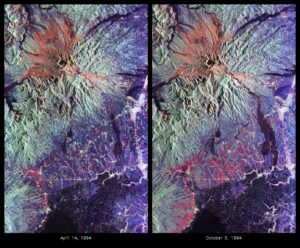
The foundational natural demonstration of the physical principle behind modern solar geoengineering occurred on June 15, 1991, when Mount Pinatubo in the Philippines erupted. According to geological assessments by the United States Geological Survey, the volcano injected nearly 20 million tons of sulfur dioxide gas into the stratosphere. High-altitude atmospheric currents dispersed that chemical plume globally within approximately three weeks, forming a reflective haze of sulfate aerosols. Global observations subsequently showed a temporary global cooling of roughly 0.5 degrees Celsius, lasting through 1993 as the volcanic aerosols gradually dispersed.
Mount Pinatubo confirmed that reflective stratospheric particles can temporarily depress global temperatures. For decades, that observation remained largely confined to academic climate models and hypothetical calculations. Deliberately reflecting sunlight back into space was long treated as an extreme and potentially dangerous concept, liable to weaken incentives for emissions cuts or introduce unpredicted meteorological shifts.
That institutional restraint is changing. As interest has grown amid persistent warming and slow progress on emissions reductions, solar radiation modification has moved from computer simulations into funded state programs, venture-backed commercial enterprises, and contentious multilateral debate. The central tension is institutional rather than purely technical. While the basic physics of lofting reflective particles into the upper atmosphere is understood, no comprehensive international regime governs solar radiation modification from research through deployment. Existing treaties and domestic laws address parts of the problem, but none provides an agreed system for deciding who can authorize an intervention on a planetary scale.
The Mechanisms of Solar Radiation Modification
Solar radiation modification, often termed solar radiation management or SRM, does not remove greenhouse gases from the atmosphere. According to assessments by the United Nations Environment Programme and the Intergovernmental Panel on Climate Change, reflecting solar energy does nothing to halt ocean acidification, which continues as marine waters absorb excess atmospheric carbon dioxide under ongoing fossil emissions. The intervention alters radiative forcing by reflecting a small percentage of incoming sunlight back into space, thereby dampening surface temperatures.
Scientists examine several approaches to achieve this effect. The most prominent method is stratospheric aerosol injection. Under this concept, specialized high-altitude platforms or aircraft release aerosol precursors, primarily sulfur dioxide, or solid reflective mineral compounds into the lower stratosphere between 15 and 25 kilometers in altitude. There, precursor gases oxidize into sulfate aerosols, scattering solar radiation before it reaches the troposphere.
A secondary approach is marine cloud brightening, which proposes spraying sea-salt aerosols from ocean-going vessels into low-lying marine stratocumulus clouds. The sea-salt crystals act as cloud condensation nuclei, increasing cloud reflectivity over targeted oceanic regions. More theoretical methods, such as thinning heat-retaining cirrus clouds or placing reflective sunshades in orbital space, remain in exploratory research stages.
The direct operational cost of stratospheric aerosol injection could be comparatively low, with engineering estimates cited in assessments by the National Academies of Sciences, Engineering, and Medicine running into the billions of dollars per year. However, direct equipment delivery costs represent only a fraction of total societal costs. Economic modeling published in npj Climate Action estimates that compensation costs for side-effect harms from stratospheric aerosol injection could range from zero to $809 billion annually, depending on the extent of harm and the assumptions used in the model.
Even so, the low direct mechanical expense creates a very different collective-action problem: a free-driver problem. In conventional climate action, individual states often delay expensive mitigation while benefiting from the emissions cuts of others. With solar geoengineering, because the initial delivery mechanism is comparatively inexpensive, an individual government facing acute climate distress could possess the financial and logistical capacity to initiate an intervention unilaterally. Lockley, 2019, Wagner et al., 2025
Private Capital and Commercial Precedents
Concerns over unilateral action were heightened in late 2022 when reports emerged that Make Sunsets had launched weather balloons containing sulfur dioxide from Baja California, Mexico. MIT Technology Review
Founded by entrepreneurs Luke Iseman and Andrew Song, as reported by MIT Technology Review, Make Sunsets established a direct-to-consumer business model selling cooling credits. The company claimed that purchasing a credit to release one gram of sulfur dioxide would offset the warming impact of approximately one ton of carbon dioxide for one year. The company presented this as an offset, but the comparison is misleading because the sulfur-driven cooling is temporary while carbon dioxide remains in the atmosphere for centuries.
Official regulatory filings published by the United States Environmental Protection Agency document that Make Sunsets reported releasing approximately 0.1 tons of sulfur dioxide across more than 124 deployments through May 2025. Although the quantity was tiny compared with the scale of natural volcanic injections, the regulatory implications were immediate.
In January 2023, the Secretariat of Environment and Natural Resources of Mexico announced that solar geoengineering experimentation would not be permitted within the country, citing the precautionary principle and the lack of international governance agreements. The company subsequently resumed launches in the United States, with reporting by Inside Climate News placing releases in Nevada and California. In April 2025, the EPA formally issued an information request to investigate the startup’s operations. The agency noted that sulfur dioxide is a criteria air pollutant regulated under the Clean Air Act because of its documented risks to human health and environmental systems.
A distinct commercial player, Stardust Solutions, has also entered the sector, led by scientists with backgrounds in Israeli national laboratories and government research. According to a market analysis published by SRM360, Stardust raised approximately $75 million from private and venture entities, including Lowercarbon Capital, AWZ Ventures, Exor, and individual technology investors. The entry of venture-backed firms signals that atmospheric intervention is drawing private development capital alongside university grants.
Beyond atmospheric aerosol dispersal, private enterprise is expanding the concept of solar control into orbital space. California-based startup Reflect Orbital, which raised a $20 million Series A following a $6.5 million seed round, is developing satellite-mounted deployable mirrors that redirect sunlight directly onto Earth after sunset. Rather than seeking to cool the planet, the venture focuses on commercial sunlight delivery, proposing to extend generation hours for terrestrial solar farms and provide nighttime illumination for remote operations and emergency response. In July 2026, the Federal Communications Commission authorized the deployment and operation of its first demonstration satellite, Eärendil-1. Astronomers and dark-sky advocates, including the American Astronomical Society and DarkSky International, have raised concerns about night-sky interference, disruption of the natural nighttime environment, and light pollution. The project is distinct from solar radiation modification, but it widens the question at the heart of this article: as private companies acquire new ways to redirect sunlight, existing regulatory systems may struggle to determine who gets to decide where and when that sunlight is used.
For SRM specifically, overall funding tracked by SRM360 reached an estimated $267 million in cumulative known investments through 2025, with $214 million provided between 2021 and 2025, and an additional $154 million committed for 2026 onward. While small compared to broader energy technology investments, the financial baseline for solar climate intervention has expanded significantly.
Government Programs and Research Boundaries
State institutions are navigating their own boundaries between indoor research and physical testing.
A major publicly funded research initiative is the Exploring Climate Cooling program established by the United Kingdom’s Advanced Research and Invention Agency. Backed by £56.8 million in state funding allocated across 22 research teams, ARIA’s stated mission is to investigate the feasibility, risks, and governability of climate-cooling approaches.
ARIA has structured its program with explicit safeguards. The agency established an independent oversight and governance committee and stated that it does not fund climate deployment. Five of ARIA’s funded projects involve controlled outdoor physical experiments, including cloud-reflectivity experiments and a controlled experiment studying how mineral dusts age in the stratosphere, in which no material is released.
Nevertheless, civil society organizations, such as the ETC Group, argue that state-funded outdoor research can establish technical momentum that normalizes geoengineering. They contend that testing hardware in physical environments creates institutional investment that makes future deployment more likely, even when conducted under rigorous research mandates.
In the United States, federal agencies study atmospheric physics without conducting outdoor deployment. According to the EPA’s public guidance on geoengineering, the United States has not enacted a federal law solely devoted to solar geoengineering, but multiple existing statutes apply depending on the activity.
Under the Weather Modification Reporting Act, entities carrying out covered weather-modification operations, including attempts to modify solar radiation, must submit reports to the National Oceanic and Atmospheric Administration. However, NOAA’s statutory mandate is confined to record-keeping and tracking; the agency does not have statutory authority to approve or deny proposed activities.
At the state level, legislative pushback has emerged. Tennessee passed legislation in 2024 prohibiting the intentional atmospheric dispersal of chemicals to alter weather or sunlight, while Florida enacted a similar statutory ban in 2025, as documented in state legislative records and summarized by the United States Environmental Protection Agency. These state statutes illustrate growing domestic opposition to atmospheric intervention and the absence of a uniform U.S. regulatory framework.
Modeled Hydrological Risks and Regional Variations
The scientific case for caution around solar radiation modification rests heavily on atmospheric dynamics. Temperature and precipitation respond differently to radiative forcing. Greenhouse gases warm the planet and increase atmospheric moisture capacity, whereas reflecting sunlight reduces the solar radiation driving surface evaporation.
Consequently, climate models evaluated by the Intergovernmental Panel on Climate Change Working Group I indicate that while solar radiation modification could offset mean surface warming, it would produce substantial residual or overcompensating regional climate changes. Global temperature compensation does not imply regional climate restoration. Regional precipitation responses remain complex, uncertain, and highly dependent on the chosen injection scenario, latitude, and aerosol altitude.
A central area of scientific research involves the world’s tropical monsoon systems. A peer-reviewed modeling study published in npj Climate and Atmospheric Science examined stratospheric aerosol intervention scenarios and identified atmospheric mechanisms associated with reductions in both mean and extreme South Asian summer monsoon rainfall. The researchers attributed the modeled rainfall reductions primarily to aerosol-induced lower-stratospheric warming, weakening of the subtropical jet, changes in wave activity and geopotential heights, and a weakening of the Asian Monsoon Anticyclone.
At the same time, the authors emphasized that these modeled outcomes remain subject to wide scientific uncertainties. Stratospheric aerosol injection cannot simply restore historical weather patterns. An intervention designed to reduce global mean temperatures could lead to localized drying in parts of the tropics while altering precipitation across other agricultural belts.
Furthermore, sulfate aerosols introduce chemical side effects. The World Meteorological Organization has observed that introducing large quantities of stratospheric sulfates can enhance chlorine- and bromine-driven chemical reactions that deplete the protective ozone layer, delaying its long-term recovery.
The Dynamics of Termination Shock
The long-term governance of solar radiation modification is constrained by the physical behavior of aerosols in the stratosphere. Injected sulfate particles have an atmospheric residence time of roughly one to two years before naturally coagulating and descending into the lower troposphere. Maintaining an artificial reflective layer requires continuous replenishment.
This dynamic creates the risk known as termination shock. If an extensive stratospheric aerosol injection system were deployed to mask several tenths of a degree or more of greenhouse warming while greenhouse gas emissions continued to rise in the background, the artificial cooling layer would hold back substantial thermal forcing.
If that deployment were suddenly and permanently terminated, whether due to war, political breakdown, systemic infrastructure failure, or geopolitical conflict, the aerosol mask would decay over one to two years. The IPCC concludes with high confidence that an abrupt termination of high-level solar radiation management under high greenhouse gas concentrations would produce rapid global warming, at rates far exceeding the pace of warming projected in the absence of the intervention.
However, scientific literature notes an important qualification. Termination shock is not an inevitable outcome of any solar radiation modification program. Assessments by the Royal Society and the IPCC point out that if an intervention were gradually phased out over decades in tandem with aggressive carbon emissions reductions and carbon dioxide removal, the risk of catastrophic rapid rebound warming would be substantially lowered.
The hazard lies in the possibility of an unplanned, sudden collapse of operational capacity before greenhouse gas concentrations are brought down, which could create a long-term dependence on maintaining the atmospheric program.
International Treaties and the Governance Gap
The international community currently lacks a dedicated, comprehensive legal treaty covering solar radiation modification research, field trials, or deployment. Existing multilateral environmental agreements touch upon aspects of the technology, but leave major jurisdictional gaps, as detailed in the IPCC Working Group III report.
The 1976 United Nations Convention on the Prohibition of Military or Any Other Hostile Use of Environmental Modification Techniques, known as ENMOD, bans military or other hostile uses of environmental modification techniques having widespread, long-lasting, or severe effects. It does not regulate civilian research, commercial endeavors, or actions undertaken under the declared banner of climate defense.
One of the most specific multilateral standards addressing geoengineering was adopted under the United Nations Convention on Biological Diversity. In 2010, the tenth Conference of the Parties passed Decision X/33, which invited governments to apply a precautionary approach and ensure that no climate-related geoengineering activities that may affect biodiversity take place until there is an adequate scientific basis and appropriate consideration of the associated risks.
However, Decision X/33 is non-binding and includes an explicit exception for small-scale scientific research studies conducted in a controlled setting. The text does not establish monitoring bodies, inspection protocols, or legal penalties, leaving individual states to determine what qualifies as controlled research.
Multilateral attempts to establish formal scientific oversight have encountered diplomatic gridlock. At the sixth session of the United Nations Environment Assembly in Nairobi in February 2024, the government of Switzerland, supported by several co-sponsors, introduced a draft resolution requesting that UNEP convene an independent expert group to assess the risks, uncertainties, and governance of solar radiation modification.
As documented in official proceedings from the United Nations Environment Programme and contemporaneous reporting by Devex and the Center for International Environmental Law, the proposal was withdrawn after delegates failed to reach consensus. Debates split between countries seeking clearer international scientific assessments and countries concerned that commissioning a UN study would formally normalize solar geoengineering technologies.
This institutional impasse has fueled calls for restrictive governance. The Solar Geoengineering Non-Use Agreement, an academic initiative endorsed by more than 640 scholars, advocates for an international treaty prohibiting public funding, outdoor testing, patenting, and operational deployment of solar geoengineering technologies.
Civil society networks and researchers across the Global South argue that climate-vulnerable countries could face significant exposure to potential rainfall shifts while having limited influence over a field whose funding and research capacity remain heavily concentrated in North America and Europe, as highlighted in governance analyses tracked by SRM360 and historical reviews in Environmental Science: Atmospheres.
An Illustrative Scenario: The Politics of Attribution
To understand why the governance gap matters, consider an illustrative geopolitical scenario.
Suppose a major agricultural nation experiences an unprecedented string of lethal heatwaves that threatens food security and power infrastructure. In response, the state decides to deploy high-altitude stratospheric aerosol aircraft from its territory, arguing that the intervention is a necessary act of climate defense. Two seasons later, a severe drought strikes a neighboring regional rival, depressing crop yields and straining water reserves.
Under contemporary atmospheric science, establishing clear legal causality for a localized extreme weather event would be complex and scientifically contested. Extreme events are shaped by interacting factors, including natural climatic variability and ambient greenhouse warming. While climate attribution science can calculate probabilistic contributions to extreme events, attributing a specific drought to an ongoing aerosol program with absolute certainty would remain scientifically difficult.
Politically, however, absolute scientific consensus is rarely required for diplomatic escalation. The affected state would have strong political incentives to interpret the agricultural damage as a direct consequence of the neighboring program. Without a comprehensive international system for registration, pre-deployment notification, and liability, atmospheric intervention could trigger diplomatic disputes, retaliatory economic measures, or even attempts to disrupt deployment infrastructure.
The Moral Hazard Dilemma
Beyond legal and physical uncertainties lies the debate over political moral hazard.
Researchers who support studying solar radiation modification argue that global carbon emissions have not fallen fast enough to avert dangerous warming. If humanity approaches severe ecological tipping points, such as the collapse of tropical coral reefs or accelerated permafrost thaw, possessing a thoroughly researched tool capable of dampening peak temperatures could potentially reduce suffering for vulnerable populations. In this framing, investigating the technology is a risk-mitigation measure against unmanageable warming. McLaren, 2016
The counter-argument centers on political incentives. Critics warn that if solar radiation modification is perceived as an accessible technological stopgap, it could dilute political commitment to the arduous and expensive task of reducing fossil fuel emissions. Carbon-intensive industries and governments facing near-term economic pressures might treat the prospect of solar cooling as a rationale to postpone structural decarbonization. Wagner et al., 2025
Solar radiation modification offers an incomplete intervention. It does not cleanse the atmosphere of accumulated greenhouse gases, nor does it address ocean acidification. At best, it acts as a temporary mask over an underlying energetic imbalance, while introducing new systemic risks to global weather systems.
Humanity is exploring solar radiation modification not because the technology offers a clean solution, but because collective political systems have struggled to reduce emissions at the necessary scale. Public grant programs are expanding, private capital has entered the sector, and controlled physical experiments are moving beyond the laboratory. Yet the fundamental institutional challenge remains unresolved: when the technical capacity exists to influence the sunlight reaching every nation on Earth, who gives anyone permission to use it?
